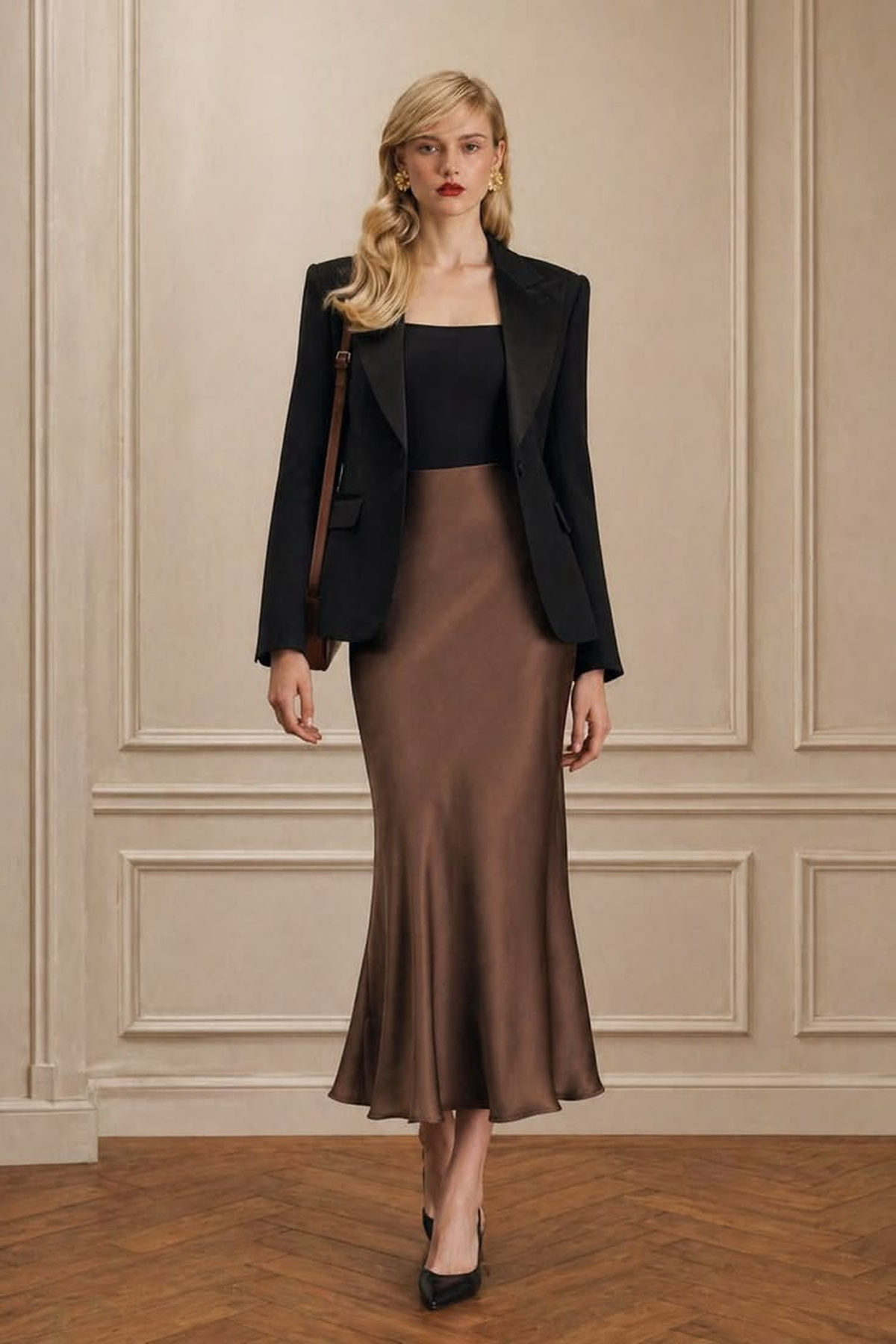
A polished office wardrobe is meant to repeat. The difference between a practical uniform and an outfit that feels stale is usually not the number of pieces you own, but how deliberately you change their role. A skirt can look structured with a fitted jacket, relaxed with striped shirting, or modern beside a clean knit.
The twelve office outfit formulas below use familiar workwear basics—blazers, button-down shirts, knitwear, skirts, trousers, and trench coats—while shifting proportion, texture, print, and color. Use them as a framework rather than a shopping list: identify the closest pieces in your wardrobe, then recreate the styling logic.
Modernize a Navy Pinstripe Set with Tall Boots
A matching pinstripe blazer and skirt already creates a strong office-ready foundation, so the easiest way to refresh it is through the supporting pieces. A soft white blouse breaks up the structure of the tailoring, while black knee-high boots give the set a clean, continuous line.
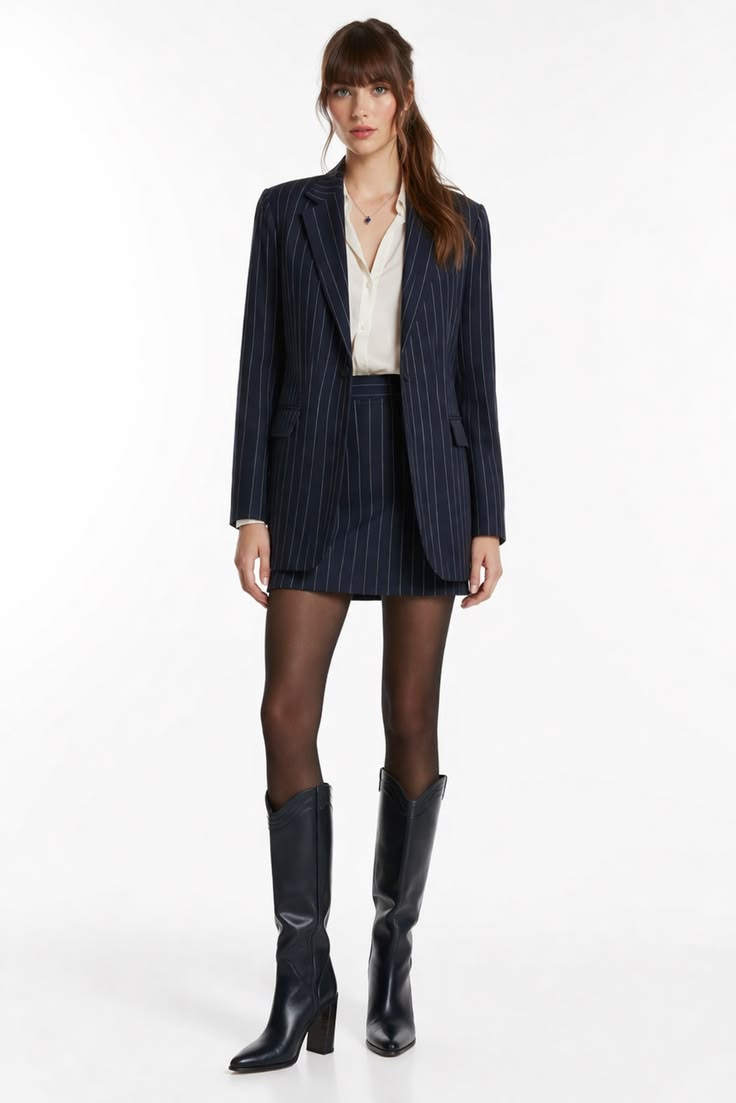
The formula works because the print remains classic but the proportions feel more modern. If a shorter skirt does not suit your workplace, keep the same idea with a knee-length pinstripe skirt or tailored shorts worn with opaque tights. The useful lesson is to update a familiar suit through footwear and layering rather than replacing the set.
Styling note: Keep the blouse fluid and lightly tucked so it softens the sharp pinstripes without adding bulk beneath the blazer.
Soften a Trench Coat with a Satin Midi Skirt
A beige trench coat is often paired with trousers, but a dark satin midi skirt gives the same outer layer a quieter, more elegant direction. The fitted taupe knit keeps the top half simple, allowing the contrast between crisp cotton and fluid satin to do the visual work.
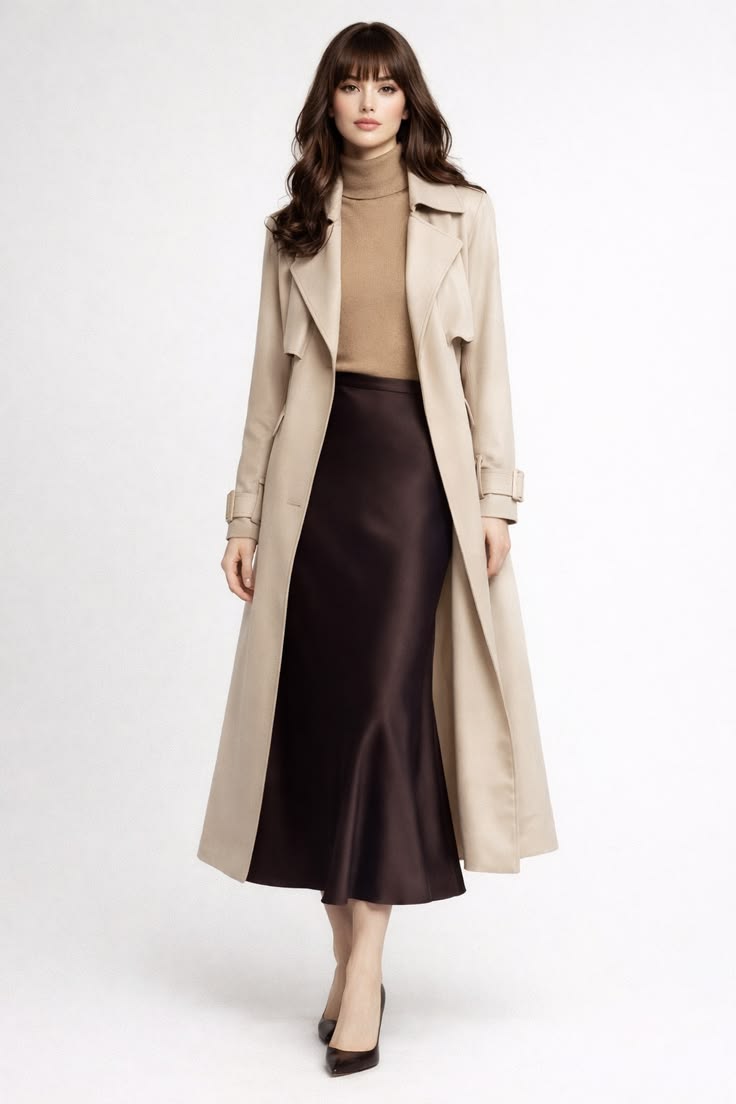
This is an effective formula for days that move from the office to dinner because it feels polished without relying on a formal suit. Keep the skirt dark and minimally detailed, then finish with simple pumps. When the trench comes off, the tonal knit and skirt still read as a complete outfit rather than an unfinished base.
Styling note: Choose a satin skirt with enough weight to hang smoothly, and steam it before wearing so the texture looks intentional.
Add One Rich Color to Camel Separates
When neutral office basics begin to feel predictable, introduce color in one controlled area. A fitted red turtleneck brings energy to a camel button-front skirt while the brown belt and boots keep the palette grounded. Because the silhouettes are simple, the stronger color still feels professional.
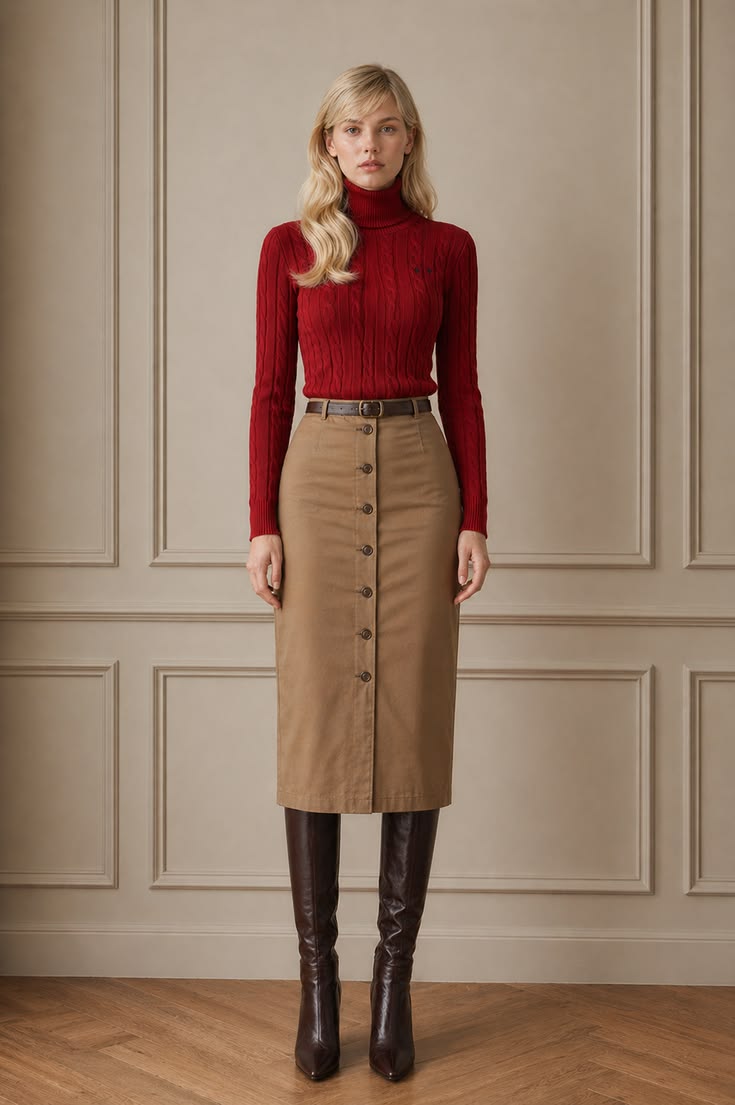
This approach is easier to repeat than building a different colorful outfit every week. The same camel skirt can work with navy, ivory, black, or soft blue, while the red knit can later be paired with charcoal trousers. Treat the color as a modular wardrobe piece rather than a one-look statement.
Styling note: Repeat the warm brown family in the belt and boots so the red knit remains the only strong color statement.
Balance a Fitted Knit with Wide-Leg Trousers
Changing proportion can make two dependable basics feel completely new. Here, a close-fitting navy turtleneck creates a precise upper line, while high-waisted camel trousers add movement and presence below. The slim belt marks the transition between the two colors without interrupting the long trouser line.
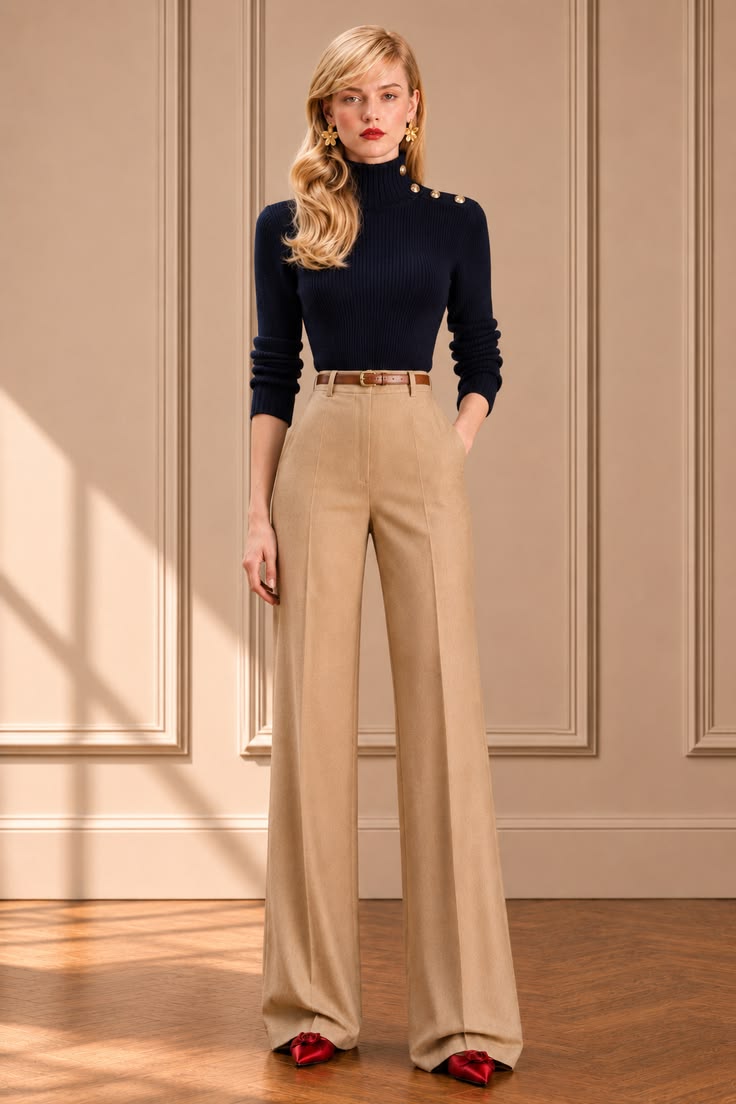
The navy-and-camel combination is timeless enough for a repeat work wardrobe, yet the wide leg prevents it from feeling generic. A small red shoe peeking from beneath the hem adds personality without competing with the tailoring. For the cleanest finish, tailor the trousers to the exact shoes you plan to wear most often.
Styling note: Keep the knit smooth enough to tuck cleanly, and let the trouser hem nearly meet the floor without dragging.
Use Black to Sharpen a Camel Pencil Skirt
A camel pencil skirt can look warm and traditional, but a simple black blouse immediately makes it sharper. The short sleeves and open neckline keep the top from appearing heavy, while the skirt supplies enough structure for meetings and more formal office settings.
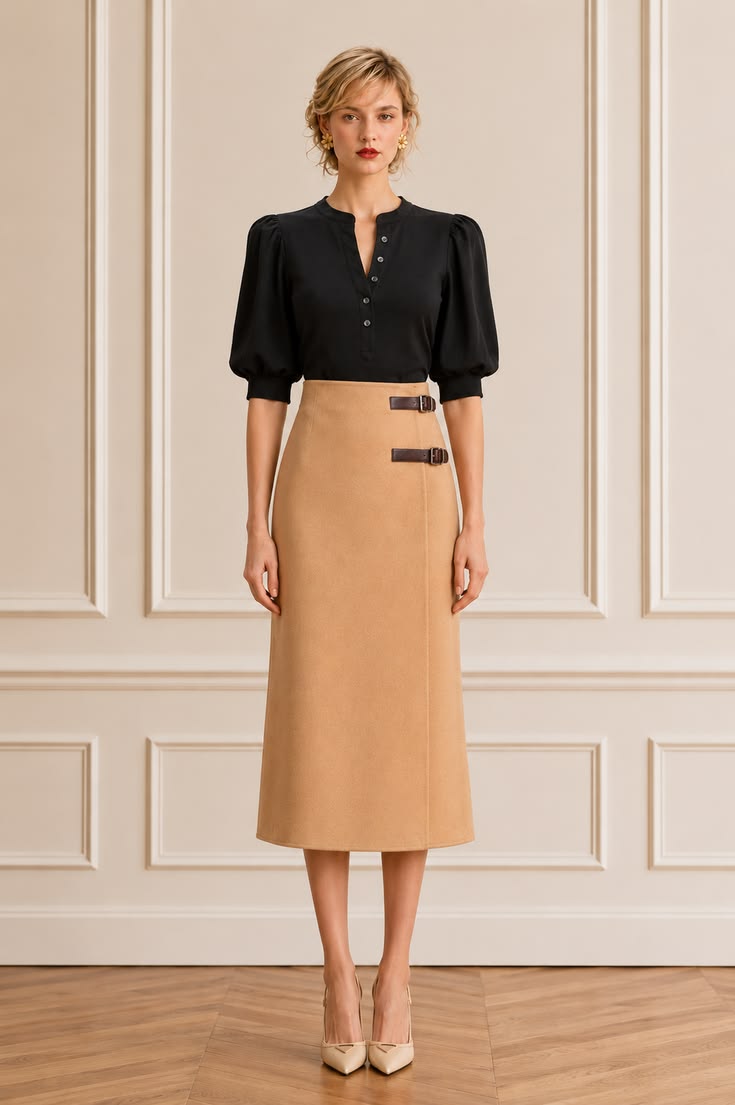
This is a useful low-effort formula because both pieces are visually quiet. Interest comes from the contrast of dark and light rather than extra accessories. Ivory pumps lift the palette and prevent the look from becoming too severe; black loafers or slingbacks would create an equally polished, slightly more practical variation.
Styling note: Choose one clean neckline and minimal jewelry—the strong black-and-camel contrast already provides definition.
Refresh the Same Camel Skirt with a Printed Blouse
The clearest way to make repetition look intentional is to restyle the same recognizable basic in a contrasting mood. After pairing a camel skirt with a solid black blouse, switch to an ivory polka-dot blouse with a softly tied neckline. The skirt remains familiar, but the print and neckline change the focal point.
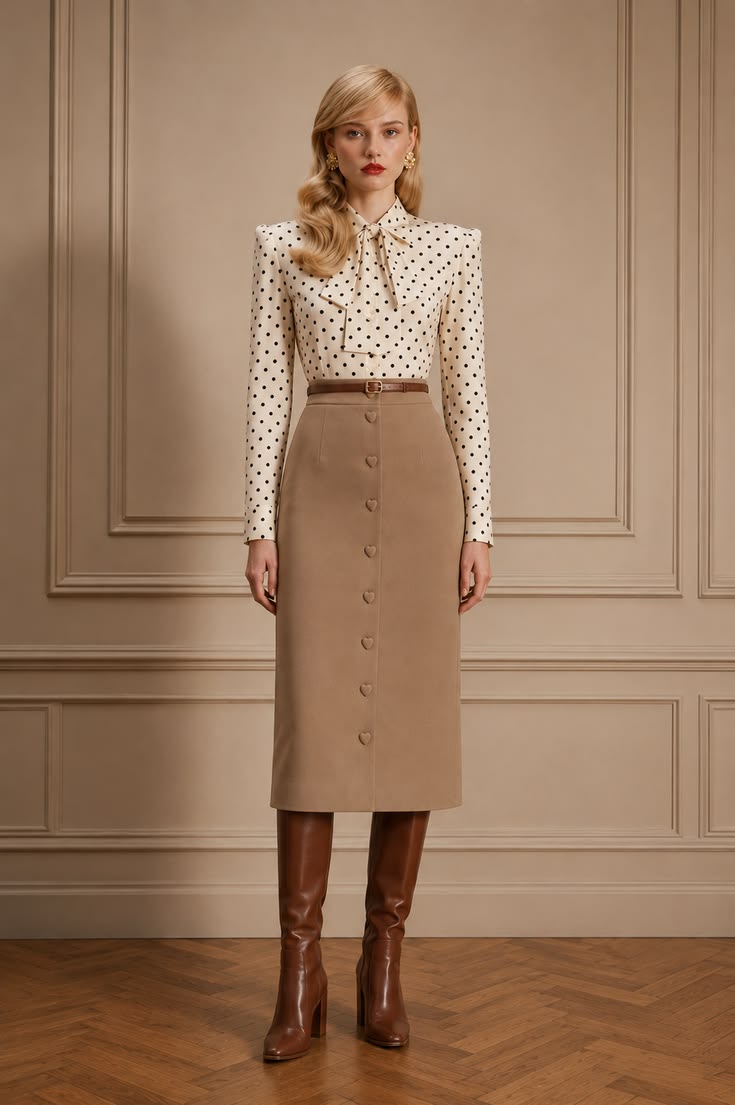
Small-scale prints are especially useful in office wardrobes because they behave almost like solids from a distance. Brown boots reinforce the skirt and make the outfit feel cohesive, while the ivory base keeps it light. This formula also works beneath a navy or chocolate blazer when an additional layer is needed.
Styling note: Keep the bow relaxed rather than oversized so it fits neatly beneath a coat or blazer lapel.
Mix Near-Matching Tailored Neutrals
Your blazer and trousers do not need to be an exact suit to look coordinated. Combining a charcoal-gray jacket with taupe trousers creates depth while preserving the authority of tailoring. An ivory blouse connects the two neutrals and keeps the overall palette calm.
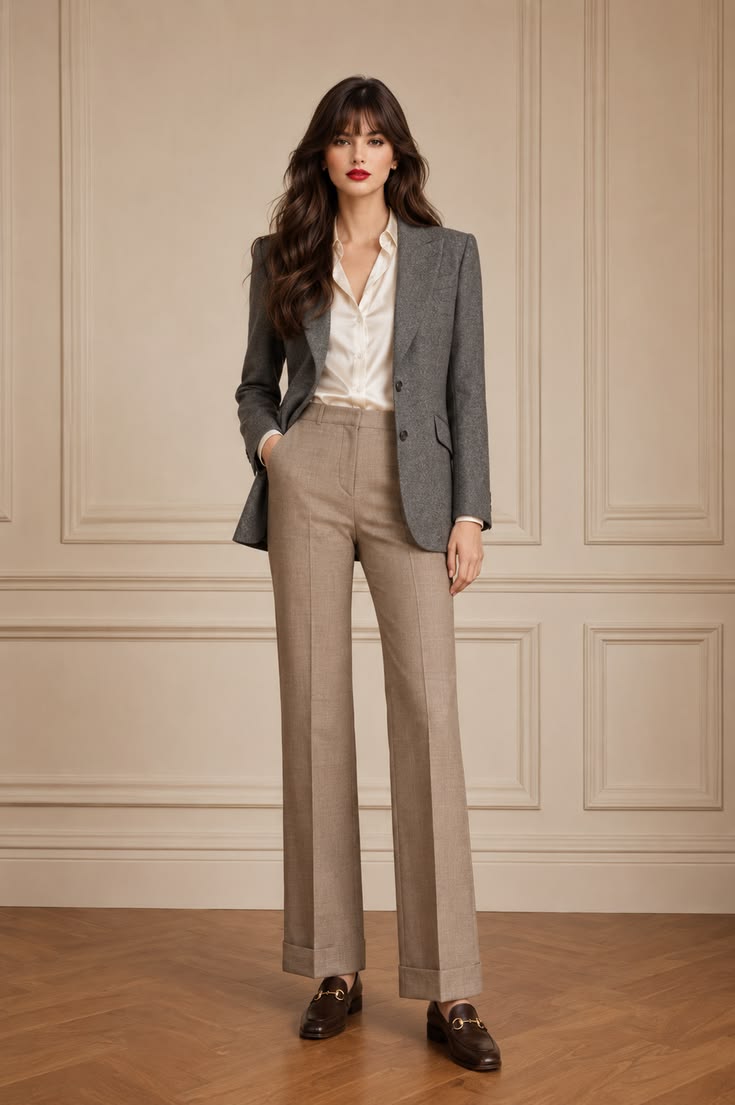
This mix-and-match approach expands a small work wardrobe because each tailored piece can still return to its original set. Straight-leg trousers and loafers make the outfit practical for an active day, while a pointed shoe could raise the formality. Aim for fabrics with similar visual weight so the separates look deliberately paired.
Styling note: Compare the blazer and trousers in daylight; slightly different neutrals look best when their undertones remain compatible.
Dress Up an Ivory Skirt with a Printed Jacket
A full ivory midi skirt can serve as a surprisingly versatile office basic when the fabric holds a clean shape. Pairing it with a fitted black polka-dot jacket creates a defined upper half and a polished contrast. The red bow works as a contained accent rather than an additional competing print.
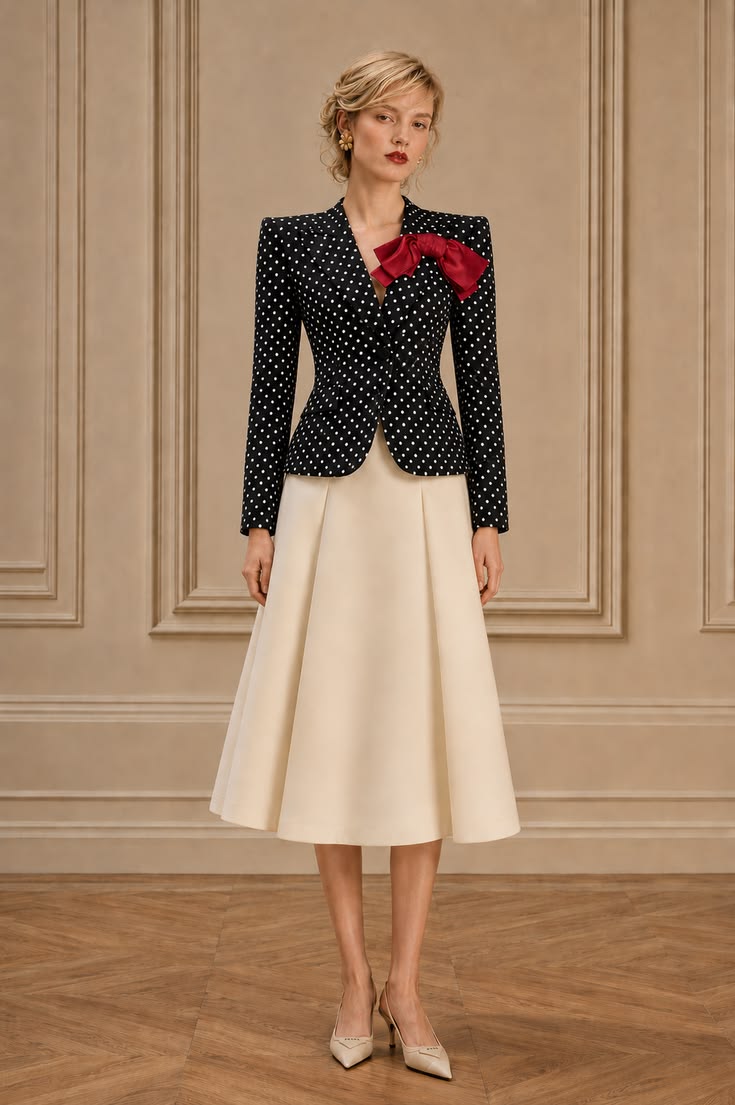
Because the jacket carries most of the detail, the skirt, pumps, and jewelry can remain understated. This formula is particularly effective for presentations, events, or workplaces with a more refined dress code. For a quieter version, replace the bow with a plain ivory shell while preserving the same jacket-and-skirt proportions.
Styling note: Let the jacket finish close to the waistband so the A-line skirt keeps its clean, balanced shape.
Restyle the Ivory Skirt with a Striped Shirt
The ivory skirt from the previous formula becomes an entirely different office outfit when paired with a blue striped shirt. The shirt introduces a crisp daytime rhythm, while the slim brown belt and knee-high boots add warmth and definition. Repeating the skirt now feels purposeful because the top, texture, and formality have all changed.
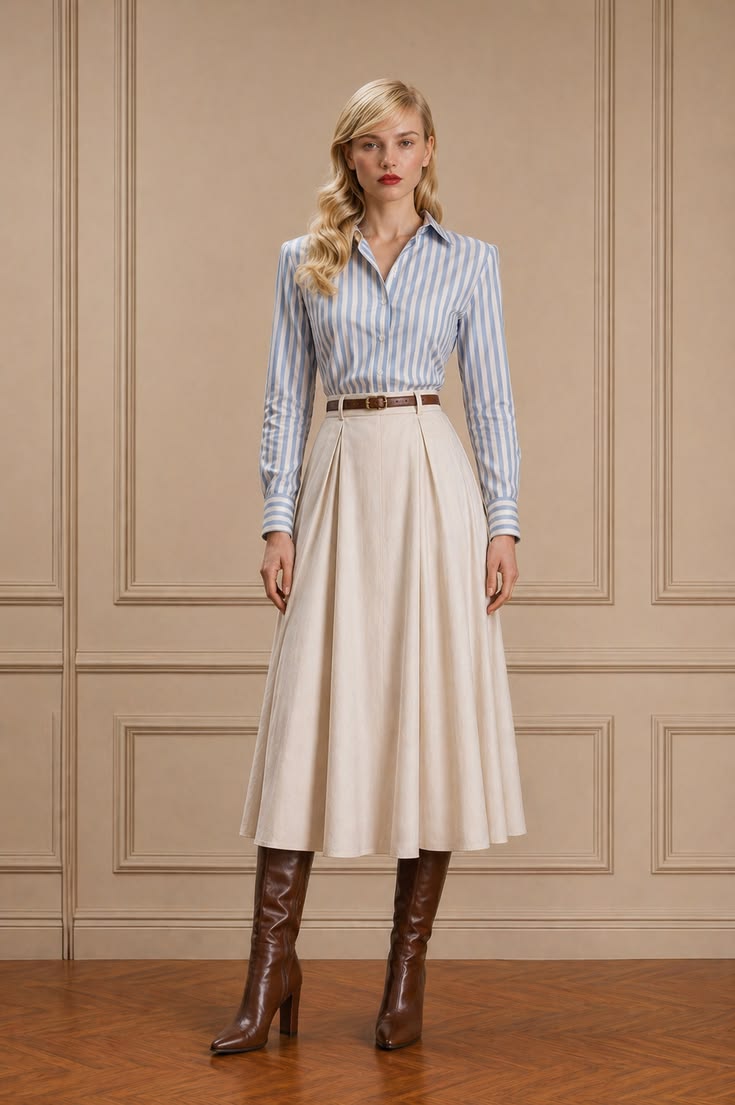
Keep the shirt neatly tucked and allow a little softness through the body rather than pulling it tight. The result sits between classic shirting and feminine tailoring, making it useful for ordinary office days. In warmer weather, swap the boots for loafers or slingbacks without changing the core formula.
Styling note: Roll-free cuffs and a pressed collar help the relaxed shirt-and-skirt pairing retain a professional finish.
Build a Light Neutral Column Under a Trench
Light neutrals feel more dimensional when the shades are close but not identical. An ivory blouse and white wide-leg trousers create a clean inner column, while the beige trench adds a warmer outer frame. A tan handbag and slim belt connect the layers without making the outfit overly matched.
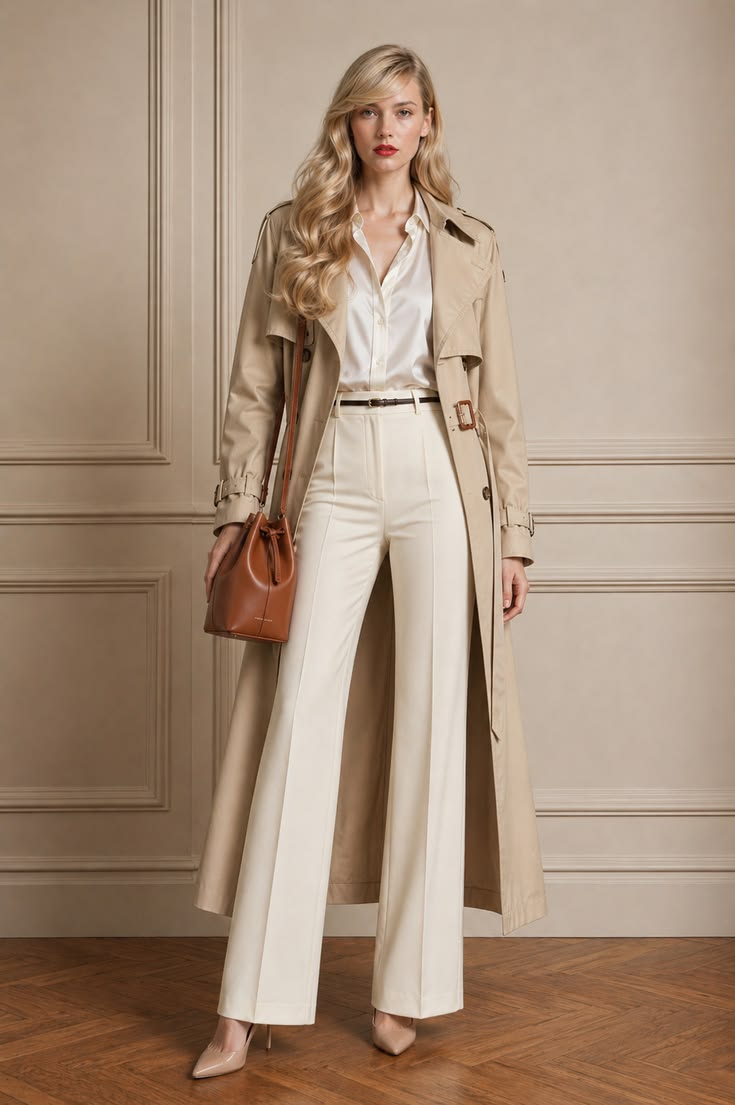
The formula proves that tonal dressing does not require one exact color from head to toe. Variation in fabric—soft blouse, structured trousers, crisp trench—keeps the pale palette from looking flat. Choose opaque fabrics and simple underlayers so the light colors remain practical and polished throughout the workday.
Styling note: Use texture and warm leather accents to separate neighboring shades of white, ivory, and beige.
Mix Soft Tailoring with a Leather Column Skirt
Texture can refresh familiar neutrals more effectively than introducing another color. A dark brown leather column skirt gives depth to an ivory blouse, while the cropped beige jacket creates a concise, structured frame. The shorter jacket also allows the long skirt line to remain visible.
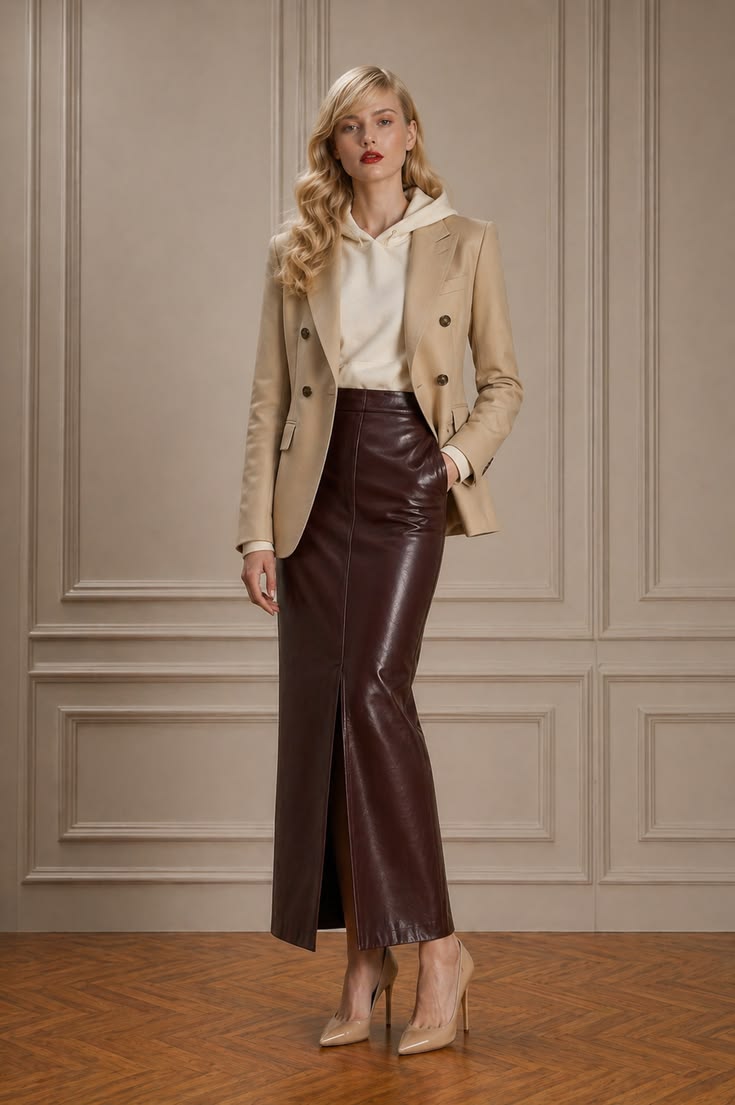
For conservative offices, choose a matte leather or high-quality coated fabric with minimal hardware and a comfortable walking slit. Neutral pumps keep the outfit refined, but loafers can make it more relaxed. The same blouse and jacket can later return to tailored trousers, giving both pieces a distinctly different second role.
Styling note: Balance a substantial skirt texture with a simple blouse and jacket; extra embellishment is unnecessary.
Make an Emerald Skirt the Color Anchor
A work wardrobe can still include memorable color when the rest of the outfit is disciplined. The emerald midi skirt is the clear focal point here, balanced by a caramel tie-front blouse, neutral pumps, and a structured brown handbag. The warm upper half keeps the green sophisticated rather than overly bright.
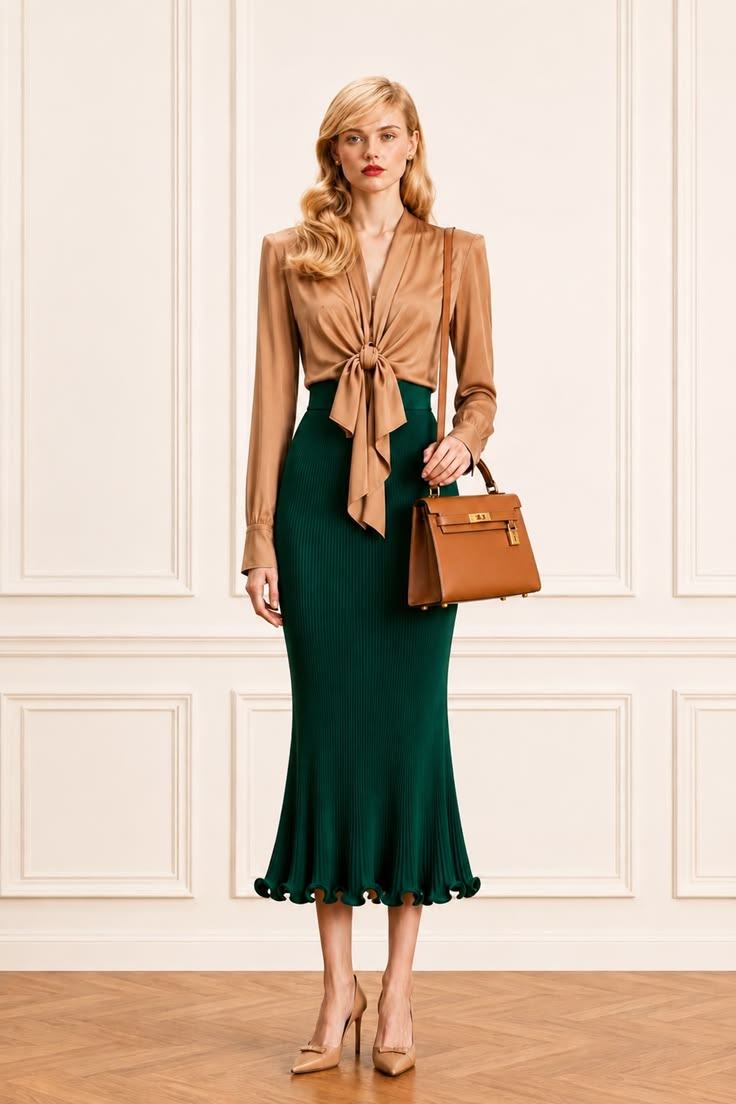
This is a strong final formula for preventing office basics from feeling repetitive: keep the familiar blouse shape, skirt length, and accessories, then change only the color anchor. The emerald skirt can also work with ivory, navy, or chocolate, making it more versatile than a one-off statement piece.
Styling note: When one garment carries saturated color, keep the remaining pieces warm, structured, and free of competing prints.
Frequently Asked Questions
How to Style Office Basics Without Looking Repetitive
How can I repeat office clothes without looking repetitive?
Change one major styling lever each time you repeat a piece: silhouette, outer layer, texture, color placement, or footwear. Repeating an ivory skirt with a fitted jacket one day and a striped shirt the next looks intentional because the mood and proportion are different.
Which office basics create the most outfit combinations?
Start with a tailored blazer, a crisp shirt, a fine knit, straight or wide-leg trousers, one A-line or column skirt, a trench coat, and dependable loafers or boots. Choose pieces that share a coordinated neutral palette so they can move easily between outfit formulas.
Can prints still look professional at the office?
Yes. Small polka dots, narrow stripes, and subtle checks are easy to combine with solid tailoring. Keep the print scale controlled, repeat one of its colors elsewhere in the outfit, and avoid adding several competing patterns at once.
What is the easiest way to plan a polished workweek?
Build small outfit families around one repeated base. For example, style the same skirt with a solid blouse, a printed shirt, and a fitted jacket. Photograph the combinations in advance, then choose the version that fits the weather and formality of each day.
A Clear Final Edit
Before You Finish the Outfit
- At least one major element—proportion, texture, color, or third piece—has changed.
- Repeated garments are clean, pressed, and properly tailored.
- The shoes support the exact trouser or skirt length.
- One focal point leads while the remaining details stay controlled.
- The outfit matches the formality and practical needs of the day.