Modest dressing is not one fixed aesthetic. It can be relaxed and practical, sharply tailored, softly romantic, or formal enough for a wedding. The most successful outfits begin with thoughtful coverage, then use proportion, texture, and color to create a look that feels intentional.
The ten ideas below move from easy everyday combinations to polished workwear and special-occasion dressing. Use them as formulas rather than strict rules: repeat the shapes you enjoy, adjust the colors to suit your wardrobe, and choose fabrics that feel comfortable for the setting.
Long White Blazer and Wide-Leg Jeans
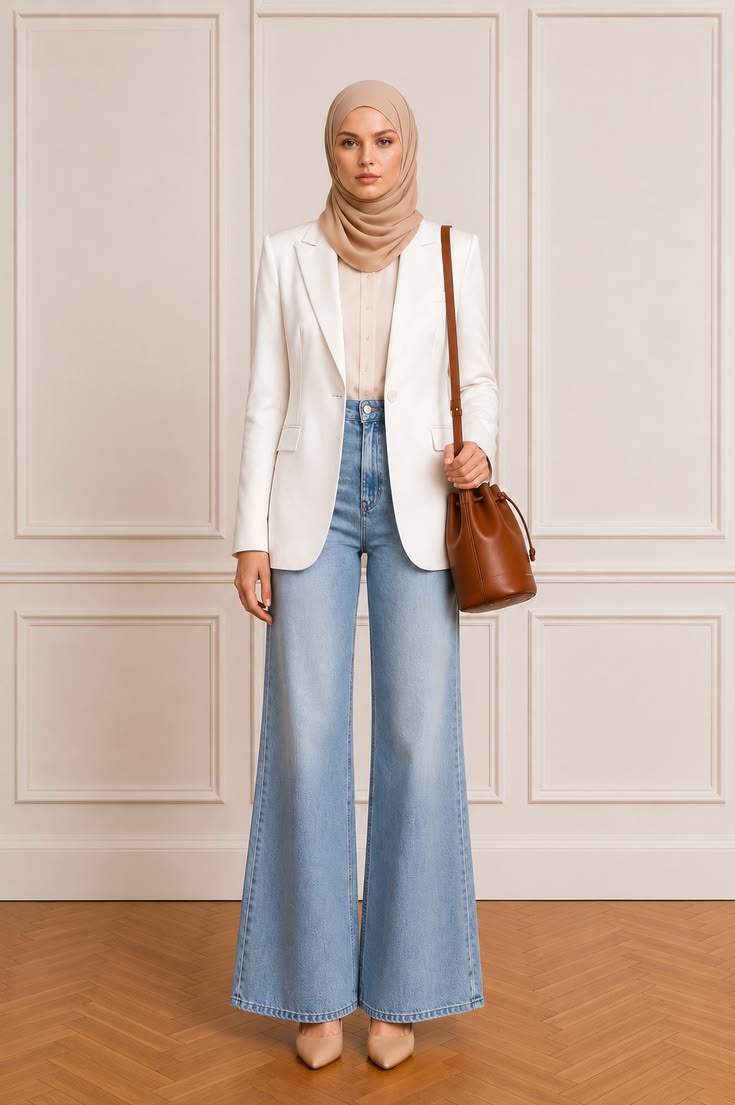
A long white blazer instantly makes dark denim feel more polished. The extended jacket creates a clean vertical line, while wide-leg jeans keep the outfit relaxed enough for a casual lunch, creative workplace, or city day. A simple shirt beneath the blazer prevents the layers from feeling busy.
Finish with pointed flats or heels when you want a sharper result, or choose minimal sneakers for a more casual version. Keep the bag structured and the color palette restrained so the tailoring remains the focus.
Styling note: Choose denim with a neat hem and an even dark wash. Those small details help a casual fabric sit comfortably beside a tailored blazer.
Satin Shirt and Denim Maxi Skirt
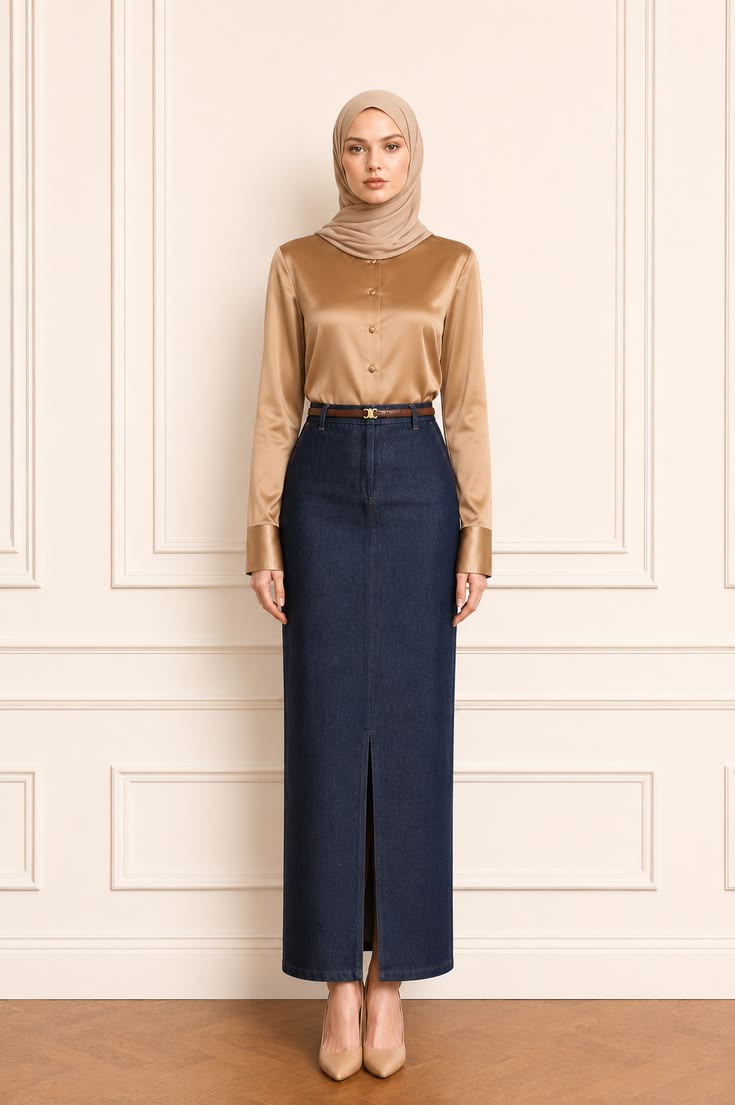
A satin shirt brings light and movement to the sturdy structure of a denim maxi skirt. The contrast makes this combination more interesting than a completely casual denim outfit, but it still feels natural for everyday wear.
Tuck the shirt neatly or let it fall just over the waistband, depending on the cut. A slim belt, simple shoulder bag, and low pointed shoes are enough to make the outfit feel complete.
Styling note: Let one fabric provide softness and the other provide structure. This keeps a tonal or neutral outfit from looking flat.
Belted Denim Jacket and Satin Maxi Skirt
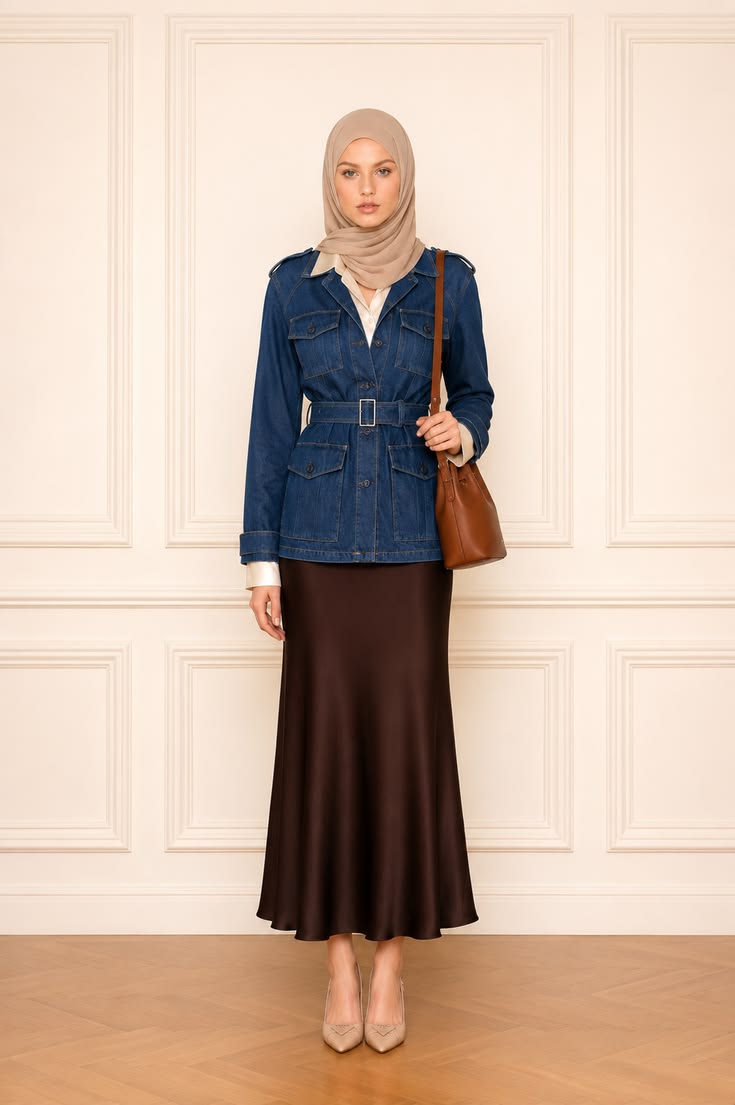
Pairing a belted denim jacket with a satin skirt is a simple way to mix casual and elegant pieces. The jacket gives the upper half shape, while the skirt adds graceful movement. Together they create a modest outfit that works for brunch, gallery visits, dinners, and semi-formal daytime plans.
Repeat one color from the jacket or skirt in your scarf, shoes, or bag. That quiet repetition helps two contrasting textures look deliberately connected.
Styling note: Keep the belt made from the same denim or in a closely related tone for a cleaner finish than a high-contrast belt.
Tailored Grey Jacket and Satin Skirt
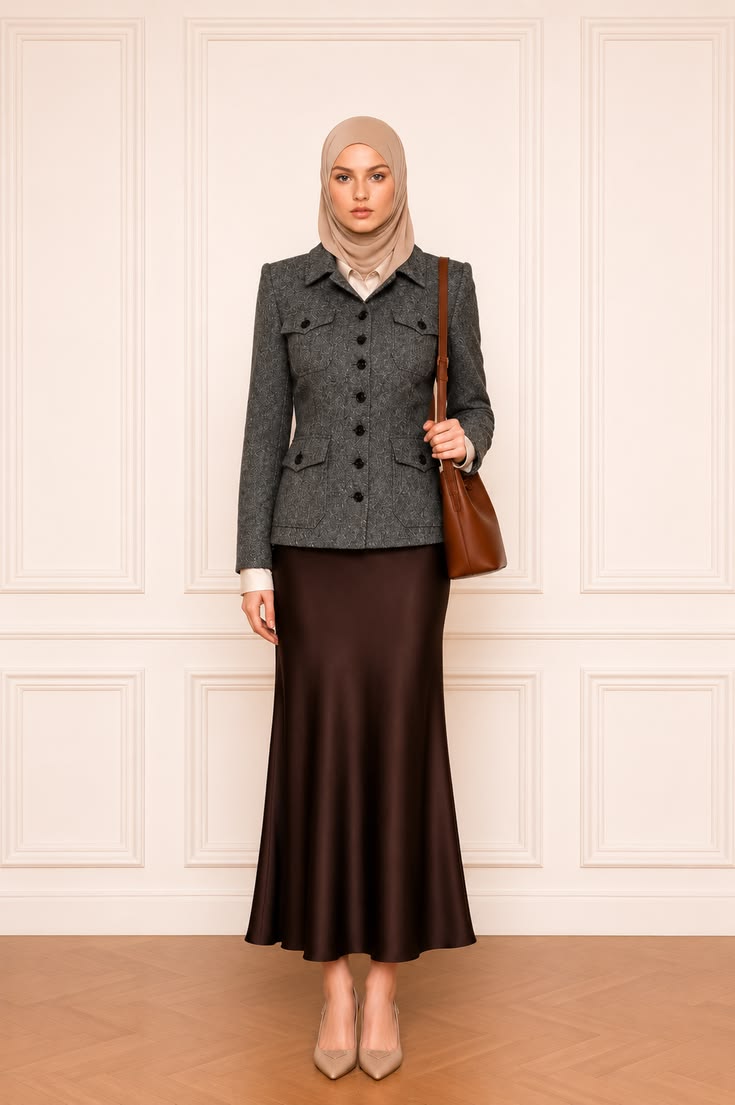
A tailored grey jacket gives a satin maxi skirt enough structure for a professional setting. This is a useful alternative when trousers or a matching suit feel too expected. The neutral palette also makes the outfit easy to repeat with different shirts, scarves, and accessories.
For work, choose a matte or softly reflective skirt rather than a highly glossy finish. A structured tote and closed pointed shoes will reinforce the polished mood.
Styling note: Grey works beautifully with ivory, soft blue, taupe, burgundy, and navy, giving you several ways to restyle the same jacket.
Blue Polka-Dot Maxi Dress
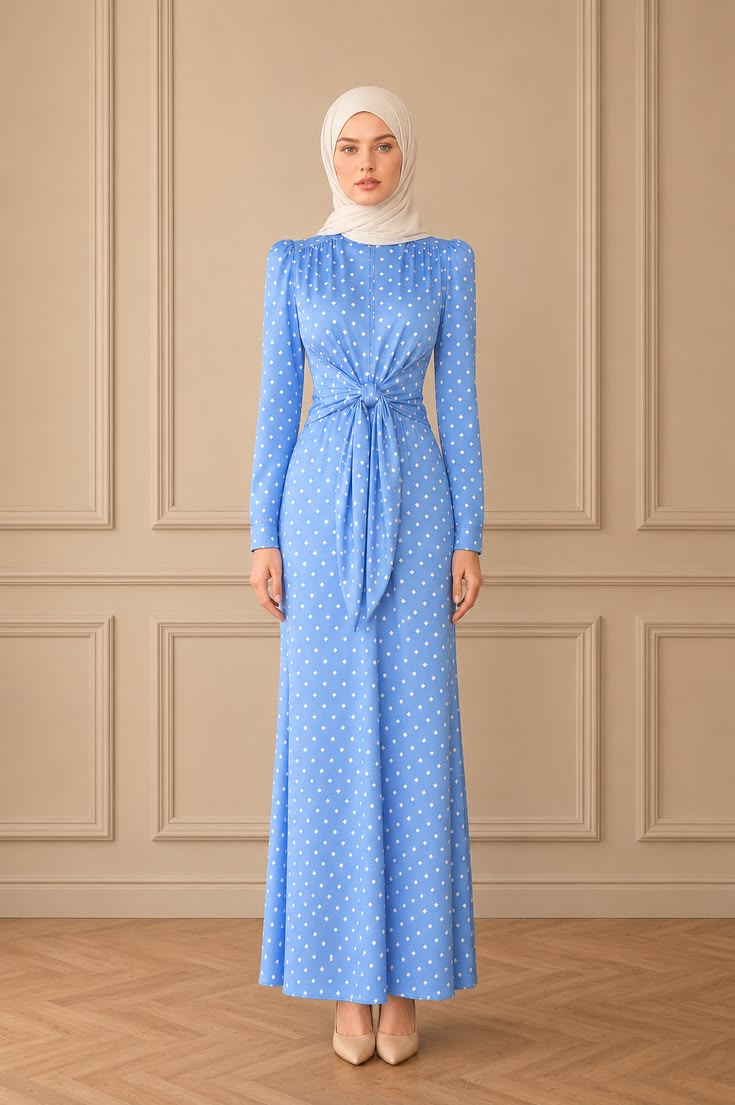
A long-sleeved polka-dot dress is an effortless one-piece solution for days when you want the outfit to feel finished immediately. Navy or deep blue keeps the print timeless, while the small repeated motif adds movement without overwhelming the silhouette.
Because the pattern already creates interest, keep the scarf and accessories simple. A narrow belt can add definition if the dress is softly cut, but it is not necessary when the dress already has a shaped waist.
Styling note: Choose one color from the print for your shoes or bag instead of introducing several new shades.
Red Wrap Top and Black Satin Skirt
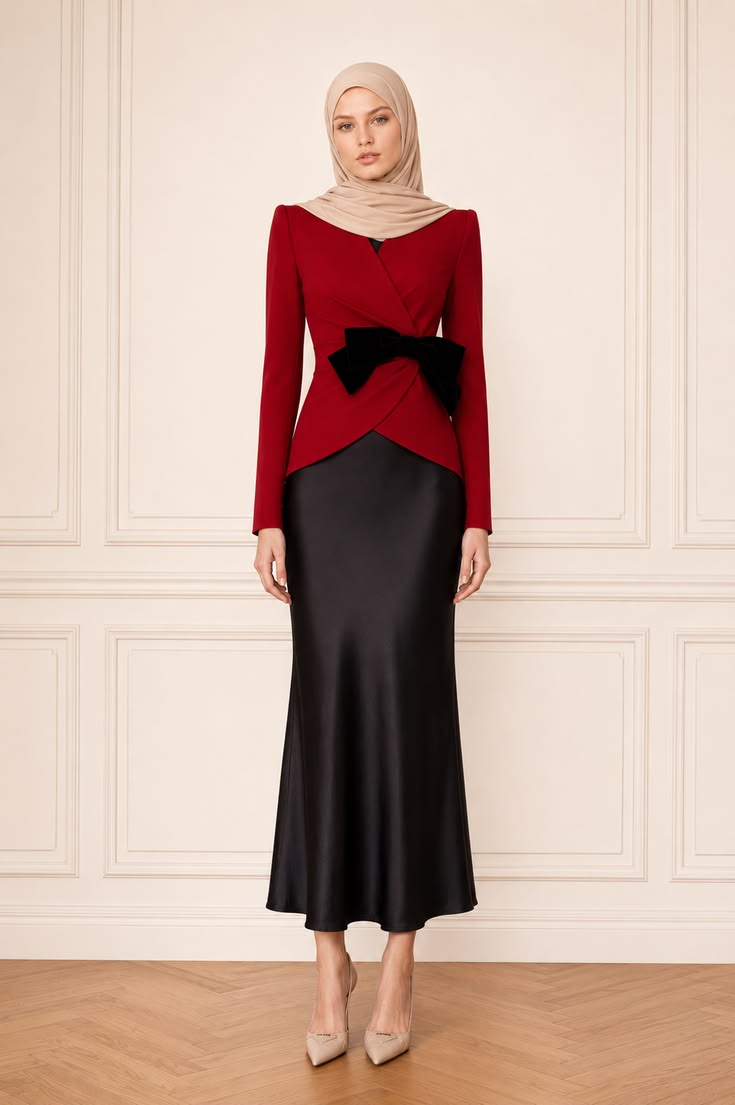
A deep red top and black satin skirt create an elegant evening combination without relying on heavy embellishment. The strong color makes the upper half the focal point, while the long dark skirt grounds the outfit and keeps the line refined.
This formula works well for dinners, celebrations, and evening events. Choose a scarf in black, soft beige, or a related red tone, then finish with a compact bag and understated jewelry.
Styling note: When the color contrast is strong, use clean shapes and minimal accessories so the outfit still feels composed.
Floral Ruffle Dress for Special Occasions
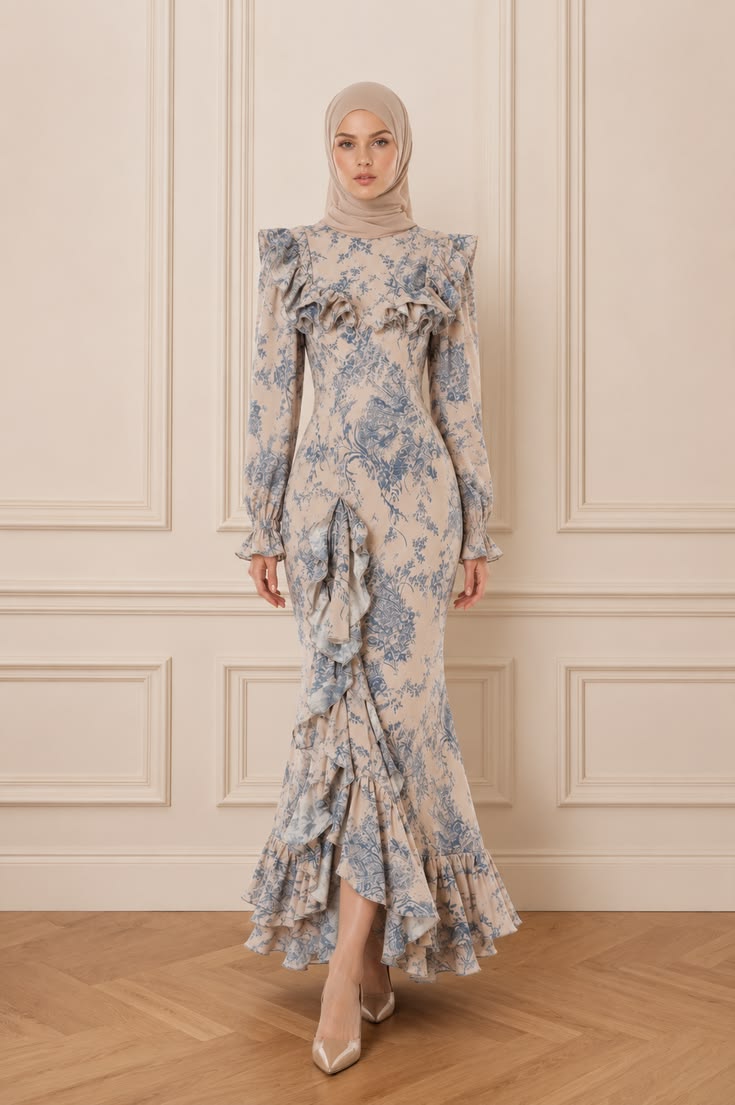
A floral maxi dress is especially well suited to garden weddings, engagement celebrations, and daytime events. Ruffles can add graceful movement, but the most timeless versions place them selectively at the neckline, sleeve, or hem rather than everywhere at once.
Pull one quiet shade from the print for the scarf and shoes. This makes the pattern feel integrated and lets the dress remain the central feature.
Styling note: A medium-scale floral print photographs clearly and usually feels more polished than a print with many tiny, competing details.
Beige Lace Dress for Formal Events
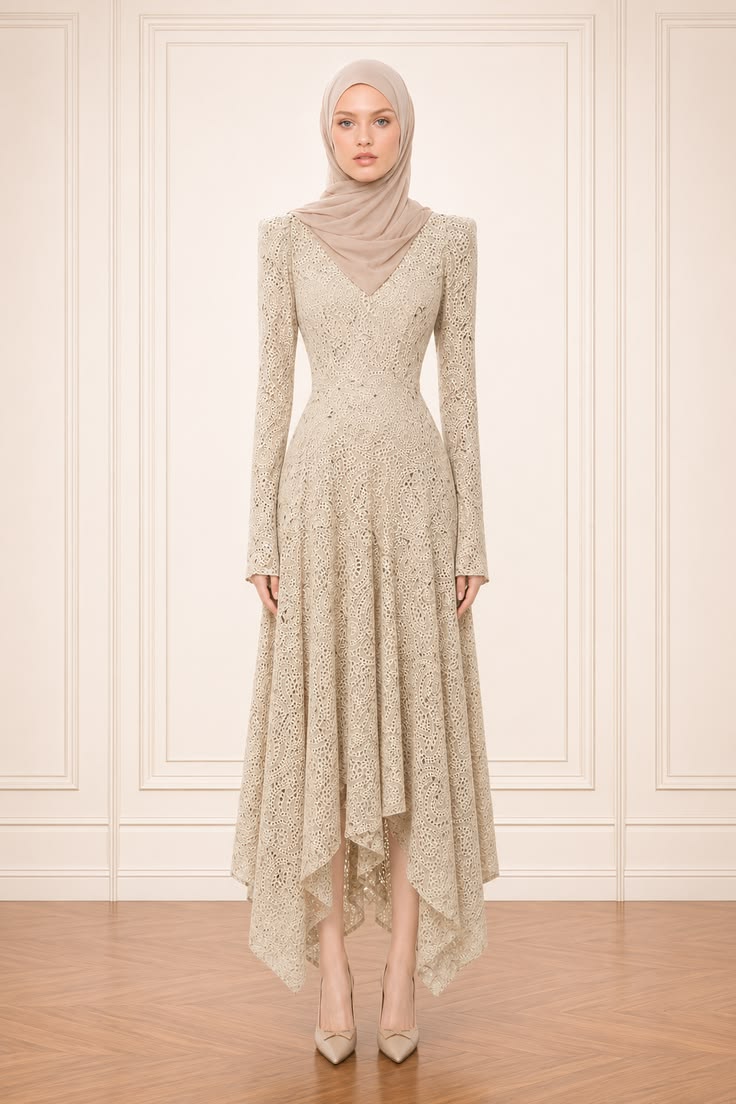
A long beige lace dress offers a softer approach to formalwear. The texture provides enough detail on its own, so the strongest styling is often tonal: a scarf in ivory, sand, taupe, or muted champagne, paired with simple pointed shoes and a small clutch.
Look for a dress with a clean lining, neat sleeve finish, and lace placement that follows the garment's construction. These quality cues matter more than adding extra decoration.
Styling note: Mix nearby neutral shades instead of trying to match every item perfectly. A little tonal variation gives the outfit depth.
Long White Blazer and Ruffled Skirt
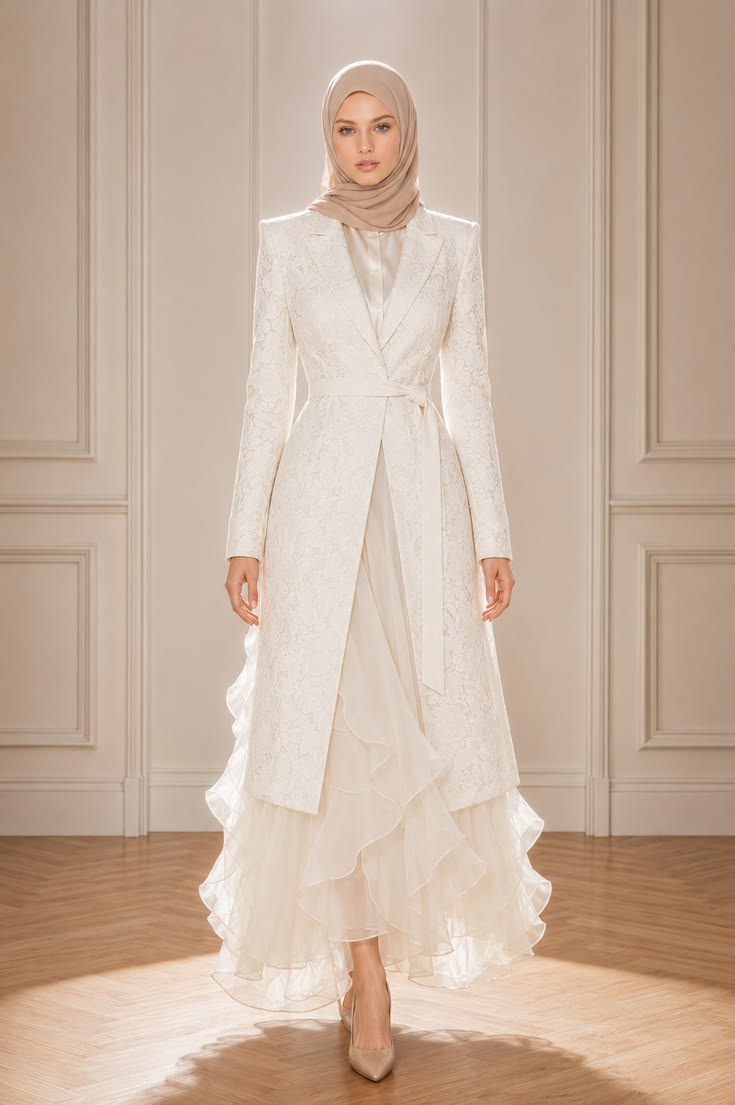
This dramatic combination works because the pieces perform different roles. The long blazer is clean and architectural; the layered skirt is soft and expressive. A self-fabric belt connects the two and keeps the volume controlled through the middle of the outfit.
Reserve this look for formal celebrations, fashion events, or special portraits. Keep the scarf, shoes, and jewelry quiet so the contrast between tailoring and ruffles remains clear.
Styling note: When one piece has significant volume, make the other piece visually calm and well defined.
Ivory Modest Bridal Look
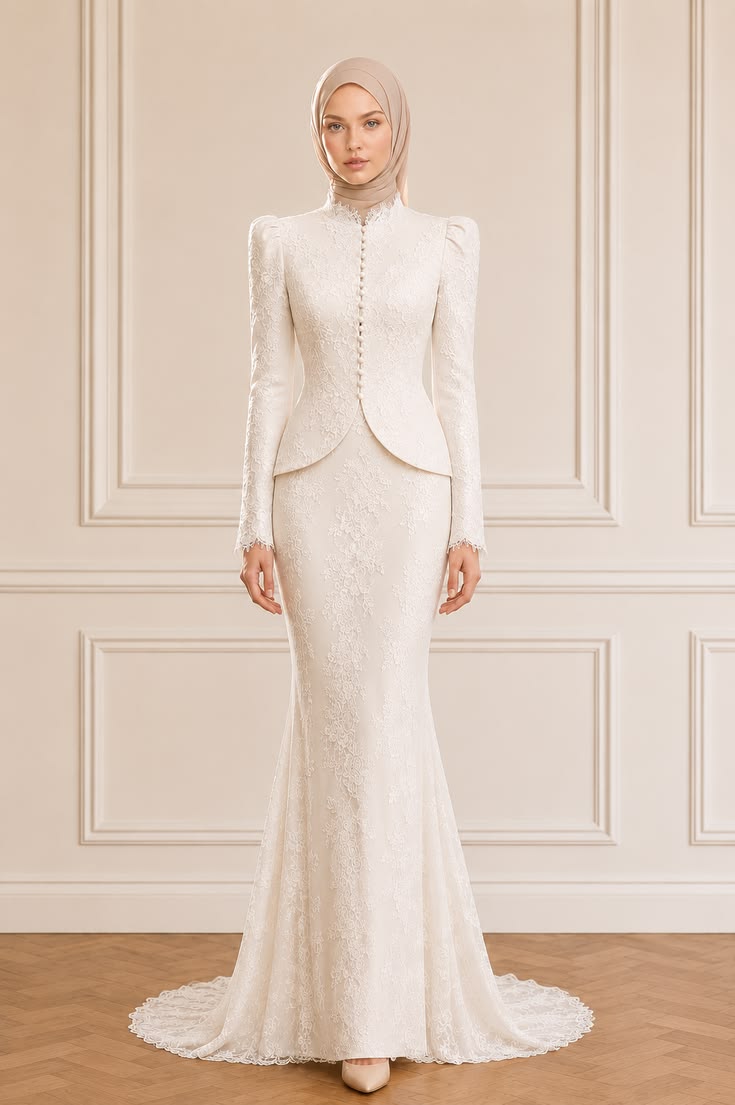
For a modest bridal look, coverage and softness can be designed as part of the dress rather than added as an afterthought. Long sleeves, a graceful neckline, thoughtful lining, and a fluid skirt create an elegant foundation. Lace, embroidery, or dimensional fabric can then add ceremony without making the design feel crowded.
Ivory, pearl, cream, and soft white can be layered together for a luminous tonal result. Keep accessories connected to the dress through texture or finish, and let one detail—such as the veil, sleeves, or embellished bodice—take the lead.
Styling note: View the full outfit in natural and indoor light before the event, since neighboring ivory tones can appear different under changing lighting.
Frequently Asked Questions
How to Make Modest Outfits Feel Polished
How can I balance proportions in a modest outfit?
Pair one relaxed or voluminous piece with another that adds structure and clarity, such as a fluid skirt with a tailored jacket or a long blouse with clean-cut trousers.
Which textures make modest outfits feel more polished?
Denim, satin, lace, crisp cotton, and soft tailoring add depth to a simple palette. Use two or three compatible textures so the outfit feels considered without becoming visually busy.
How can I coordinate colors across modest separates?
Repeat one shade in the scarf, shoes, bag, or another small detail. This visual echo helps separate pieces feel connected while keeping the overall palette calm.
Why do hem lengths matter in modest dressing?
Clean trouser, skirt, sleeve, and outerwear lengths keep the silhouette intentional. Check every hem while standing, walking, and sitting so coverage and movement remain comfortable.
How many focal points should a modest outfit have?
One clear focal point is usually enough. Let the print, color, texture, or silhouette lead, then keep the remaining pieces supportive and understated.
A Clear Final Edit
Before You Finish the Outfit
- Balance one fluid or voluminous piece with one structured element.
- Repeat at least one color across the scarf, shoes, bag, or outer layer.
- Check every hem and layer while standing, walking, and sitting.
- Let one print, color, texture, or silhouette act as the focal point.
- Make sure the finished outfit suits the weather, venue, and amount of movement required.