Color is only one way to make an outfit interesting. In a neutral wardrobe, surface and fabric often do the more important work: ribbed knit gives ivory definition, satin brings movement to navy, leather sharpens soft wool, and crisp cotton makes dark denim feel polished.
The key is contrast with restraint. Most outfits need only two prominent textures and one supporting finish. A matte fabric gives the eye somewhere to rest, while a smaller reflective, embossed, woven, or suede element provides depth. When an accent color appears, repeating it once is usually enough to connect the look.
The ten texture-mixing tips below are based on complete outfits, so each principle is easy to see and repeat. Use them with pieces you already own, adapt the colors to your wardrobe, and focus on recreating the relationship between the materials rather than copying every garment.
Create Tonal Contrast with Ribbed Knit and Satin
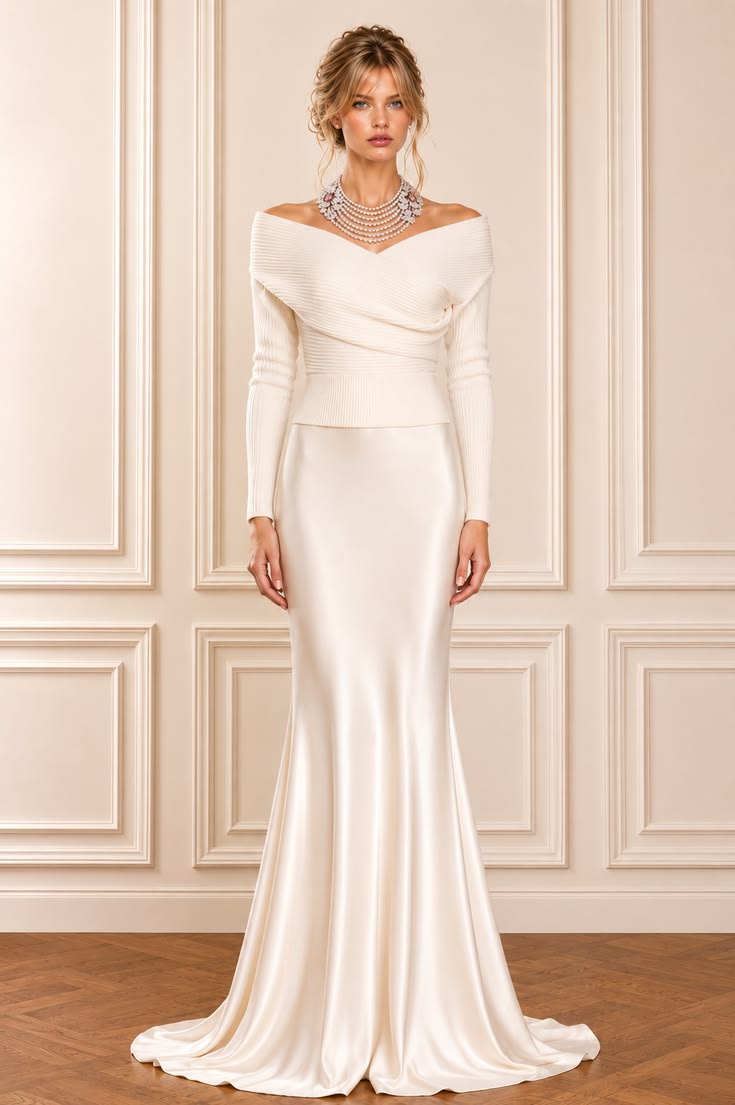
When every piece belongs to the same color family, texture becomes the structure of the outfit. The ribbed off-shoulder knit in this ivory look creates soft vertical lines, while the satin maxi skirt reflects light and moves fluidly. Because the surfaces behave differently, the tonal combination feels dimensional instead of flat.
A layered pearl necklace adds a third texture without introducing another color. Keep the knit fitted enough to define the transition into the skirt, and choose satin with a substantial drape so it falls smoothly. This approach works equally well in cream, taupe, chocolate, charcoal, or black.
Styling note: For a monochrome outfit, combine one tactile surface, one smooth surface, and one small luminous detail.
Pair Sculptural Draping with Fluid Satin
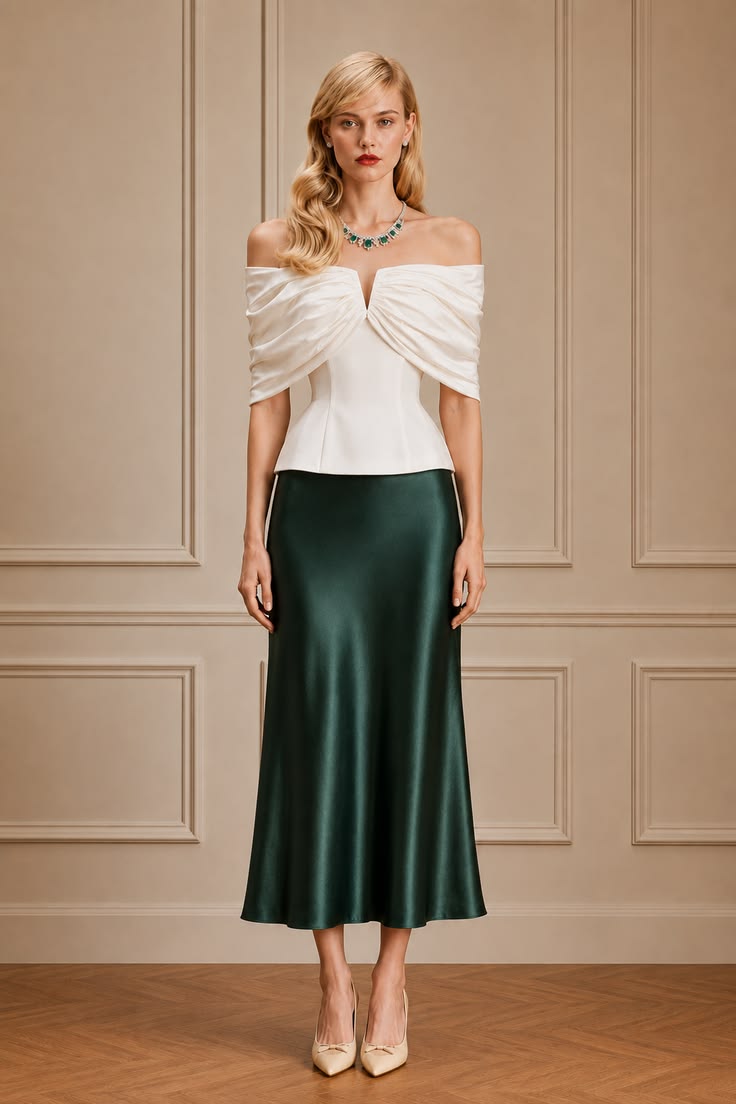
Texture can also come from construction. The gathered folds of this ivory off-shoulder top create shadow and dimension, while the emerald satin skirt supplies a smooth, continuous sheen. The contrast is subtle at the top and expansive below, giving the outfit a clear visual hierarchy.
Although emerald is an accent rather than a traditional neutral, the formula still belongs in a neutral wardrobe: begin with an ivory foundation, add one saturated color, and keep shoes and accessories restrained. The jeweled necklace echoes the green without competing with the fabric. This is a useful way to make neutral separates feel event-ready.
Styling note: When one piece has dramatic draping, keep the second silhouette clean and let color repeat only in a small accessory.
Balance Soft Knit with Leather and Suede
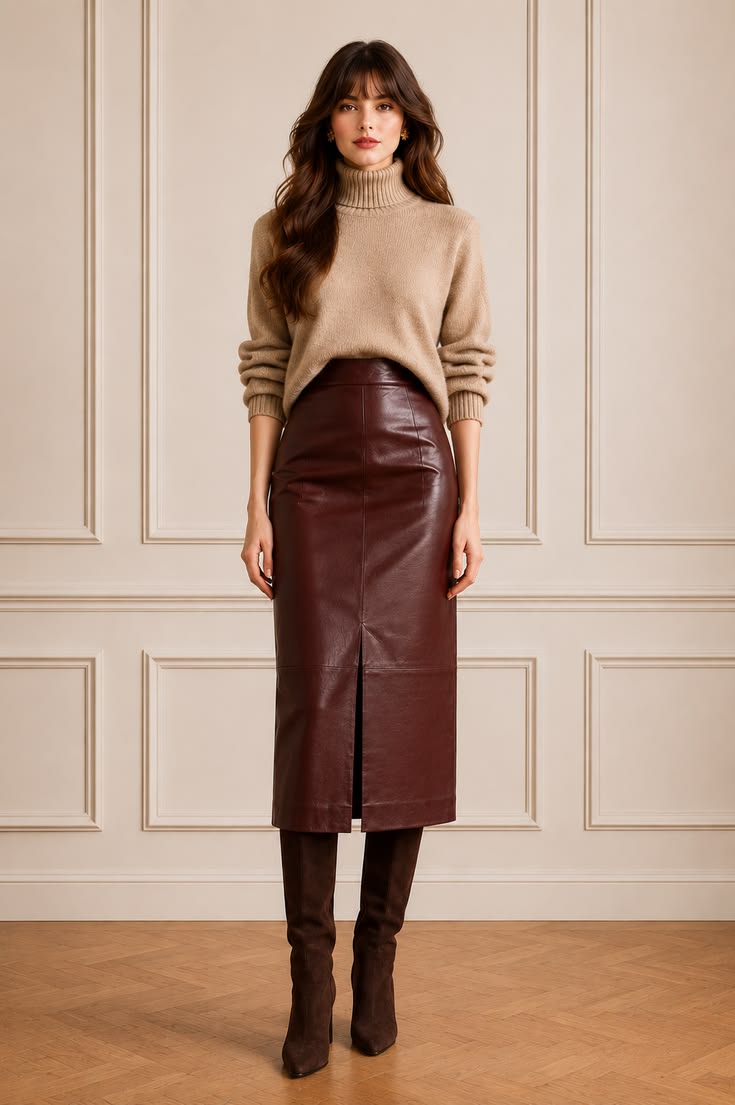
A brushed camel turtleneck and burgundy leather pencil skirt create an effective soft-versus-structured contrast. Knitwear absorbs light and reads as relaxed, while leather has a firmer surface that defines the silhouette. Deep burgundy behaves like a warm neutral, so the combination remains versatile even though it is richer than beige or black.
Chocolate suede boots introduce a third surface with a velvety, low-shine finish. Let the boot shaft disappear beneath the midi hem so the materials connect in one long line. Small gold earrings are enough decoration; the leather, suede, and knit already provide the outfit's visual interest.
Styling note: Use no more than one high-shine leather piece, then soften it with matte knitwear and suede.
Build Monochrome Depth with Matte Knit and Satin
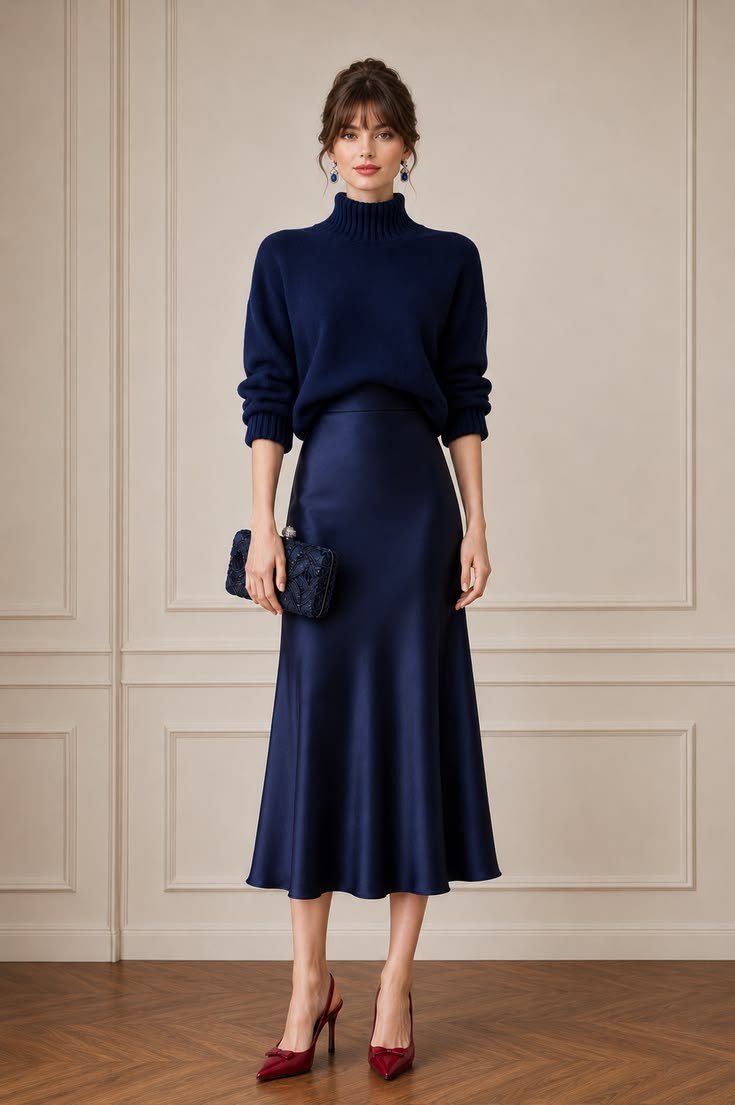
Navy is an excellent neutral for texture mixing because it appears almost graphic in matte fabric and luminous in satin. Here, the softly structured turtleneck grounds the outfit, while the satin midi skirt catches light along its folds. Matching the two colors closely allows the difference in surface to become the main design feature.
An embroidered navy clutch introduces concentrated texture at a smaller scale. Burgundy pumps provide a controlled warm accent and prevent the palette from feeling overly matched. The same principle works with black, charcoal, olive, or chocolate: repeat the color, but deliberately change the way each fabric reflects light.
Styling note: For tonal dressing, compare the pieces in daylight; compatible undertones matter more than an exact color match.
Combine Smooth Satin with Embossed Leather
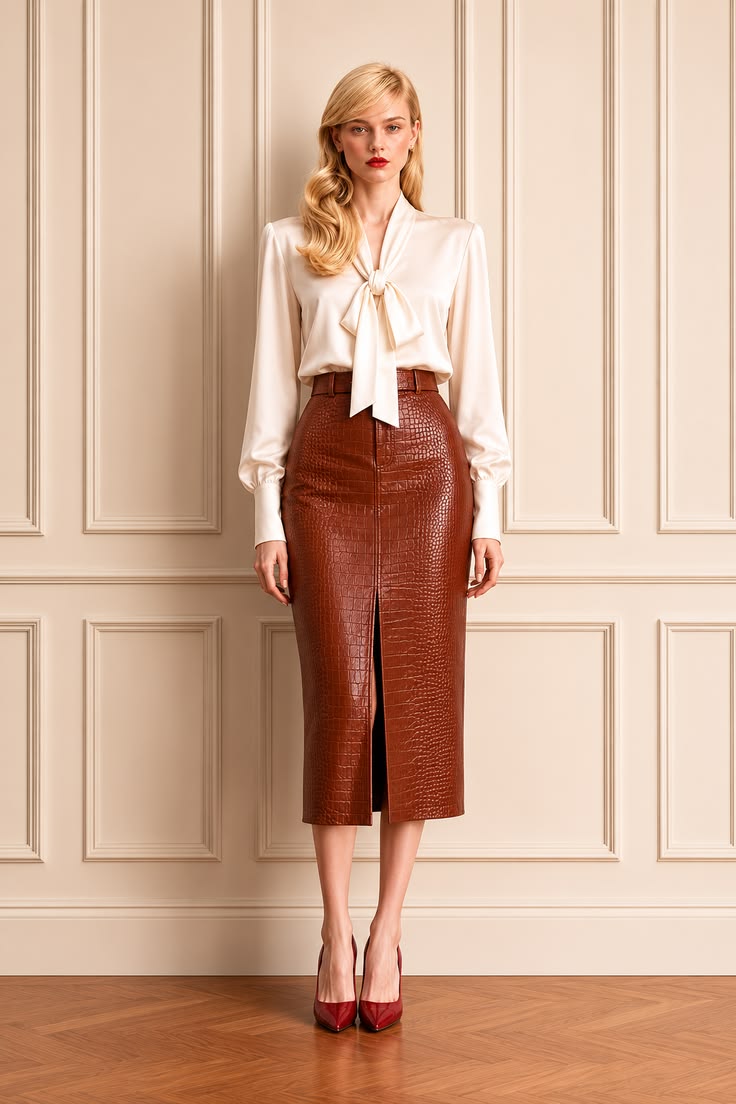
Embossed leather is visually strong, so it benefits from a simple, fluid partner. The ivory satin blouse in this look has a quiet glow and a soft tie neckline, balancing the geometric crocodile pattern of the cognac midi skirt. The shared warmth of ivory and brown keeps the contrast sophisticated.
Because the skirt supplies both texture and structure, additional details should remain precise. A slim tonal belt defines the waist without breaking the material story, while red pumps add a small point of color. For daytime, substitute a smooth cognac loafer and keep the blouse slightly less lustrous.
Styling note: Treat embossed leather as the focal texture and avoid adding another large-scale pattern.
Offset Structured Tailoring with Fluid Satin
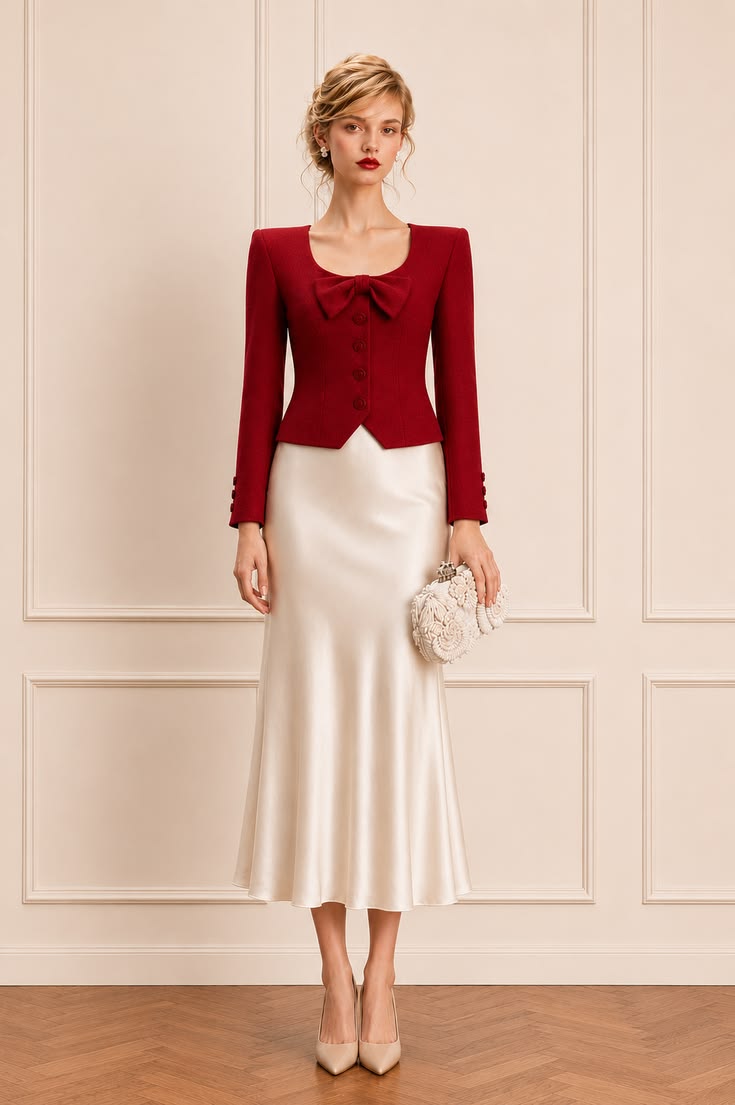
Strong tailoring and fluid satin create a polished contrast suitable for formal events. The cropped red jacket has a firm shoulder line, covered buttons, and a matte woven surface; the ivory skirt moves away from the body with a soft sheen. Their opposite qualities make the outfit feel balanced even before accessories are added.
The neutral skirt, shoes, and clutch allow the jacket to act as the single color statement. A beaded bag introduces intricate texture in a controlled area, echoing the cream base rather than creating another competing shade. This formula can be repeated with a black, navy, or camel jacket for a more strictly neutral result.
Styling note: Place the boldest color in the most structured piece, then keep the fluid and decorative textures within one neutral family.
Layer Fine Ribbing, Glossy Leather, and Suede
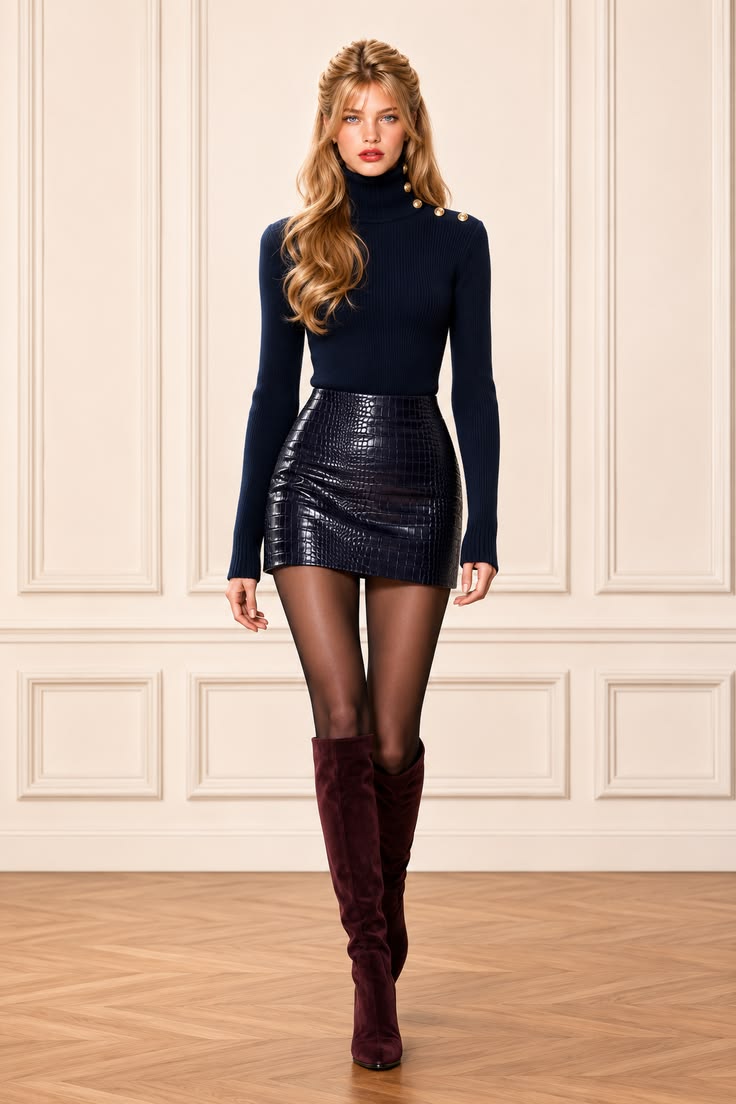
A dark outfit needs clear changes in surface to prevent its pieces from blending together. The fine navy ribbed turtleneck reads matte and streamlined, while the crocodile-embossed skirt is reflective and graphic. Sheer tights create a softer transition into the deep burgundy suede boots.
Gold shoulder buttons provide small points of light without requiring a necklace. Because the hemline and boots already make a strong statement, the upper half stays clean and fitted. For more coverage, translate the same combination into a leather midi skirt and knee-high boots while preserving the material contrast.
Styling note: In a dark palette, separate adjacent pieces with noticeably different finishes: matte, gloss, sheer, and suede.
Mix Matte Tailoring, Knit, Denim, and Leather
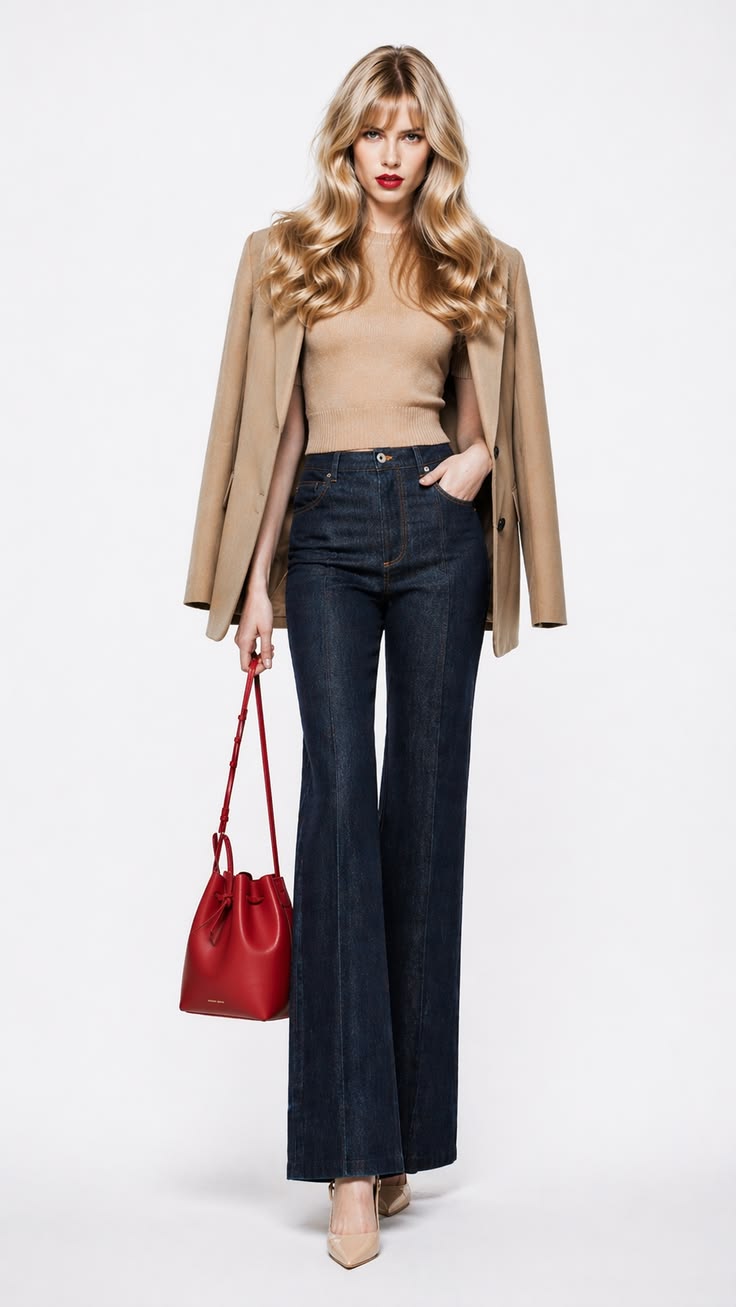
Everyday texture mixing is often most successful when it begins with familiar staples. A matte camel blazer and fine beige knit create a quiet tonal top half, while dark indigo denim adds weight and a visible weave below. The long, clean jeans keep the outfit polished enough for smart-casual workdays.
A smooth red leather bucket bag becomes the controlled accent and gives the neutral base energy. Nude pointed pumps maintain the elongated line without adding another strong texture. If you prefer an entirely neutral palette, replace the red bag with oxblood, cognac, or chocolate leather.
Styling note: Let denim be the roughest everyday texture, then surround it with smoother tailoring and one polished leather accessory.
Soften Dark Denim with Fluid Print and Woven Fiber
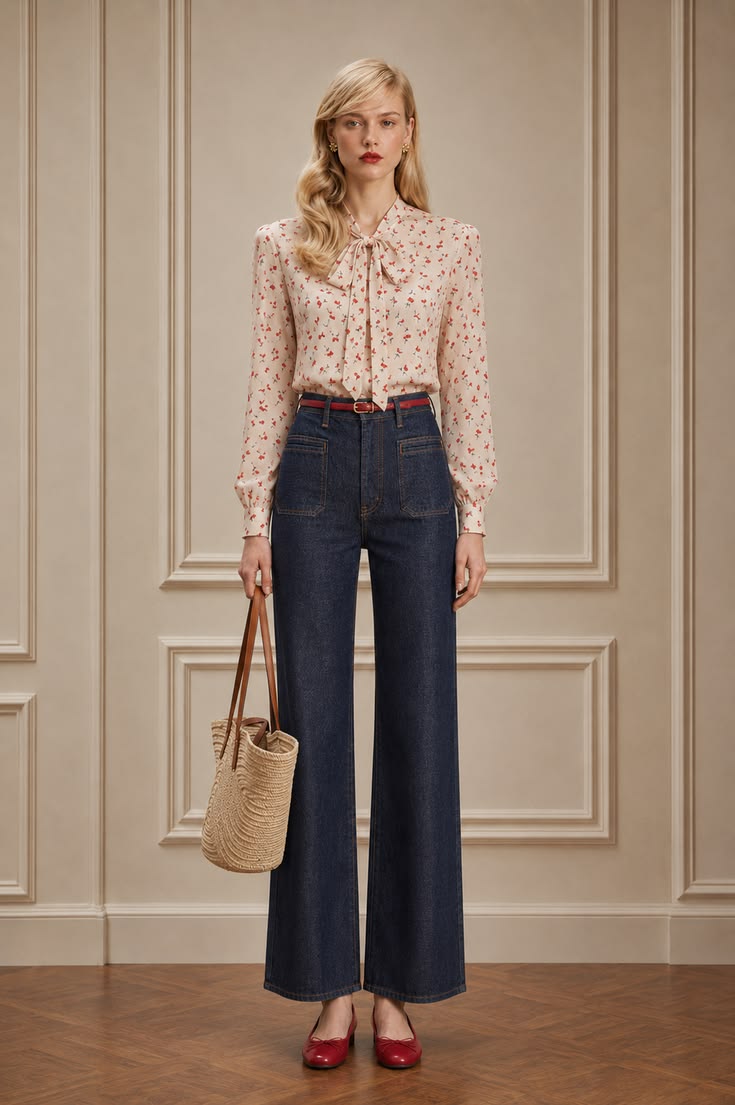
A neutral wardrobe can include a small print when its background coordinates with the rest of the outfit. This ivory tie-neck blouse has a soft, fluid surface and a restrained red motif, creating contrast against sturdy dark denim without overwhelming it. The wide-leg jeans provide structure and keep the romantic blouse grounded.
The woven straw tote introduces a natural, matte texture, while the slim leather belt and red flats repeat the warm accents in the print. Repetition makes the extra surfaces feel intentional. Outside warm weather, exchange the straw bag for pebbled tan leather and keep the rest of the formula unchanged.
Styling note: When mixing print and texture, repeat one print color twice and keep every other accessory visually simple.
Contrast Crisp Striped Cotton with Dark Denim
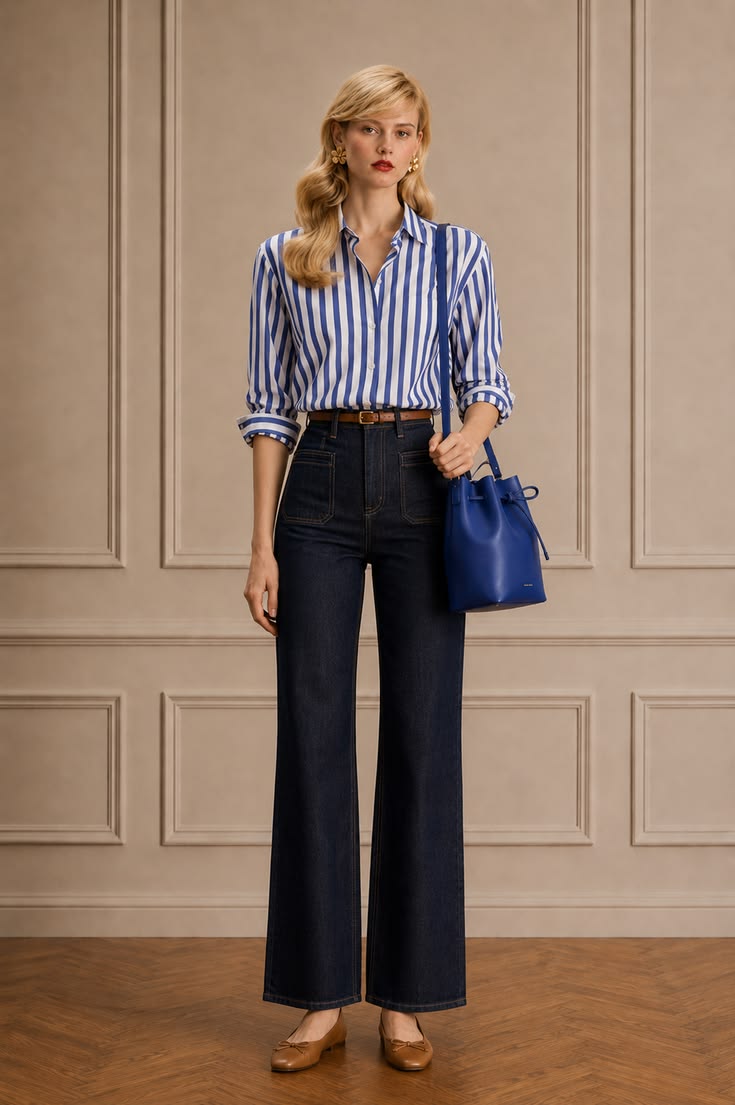
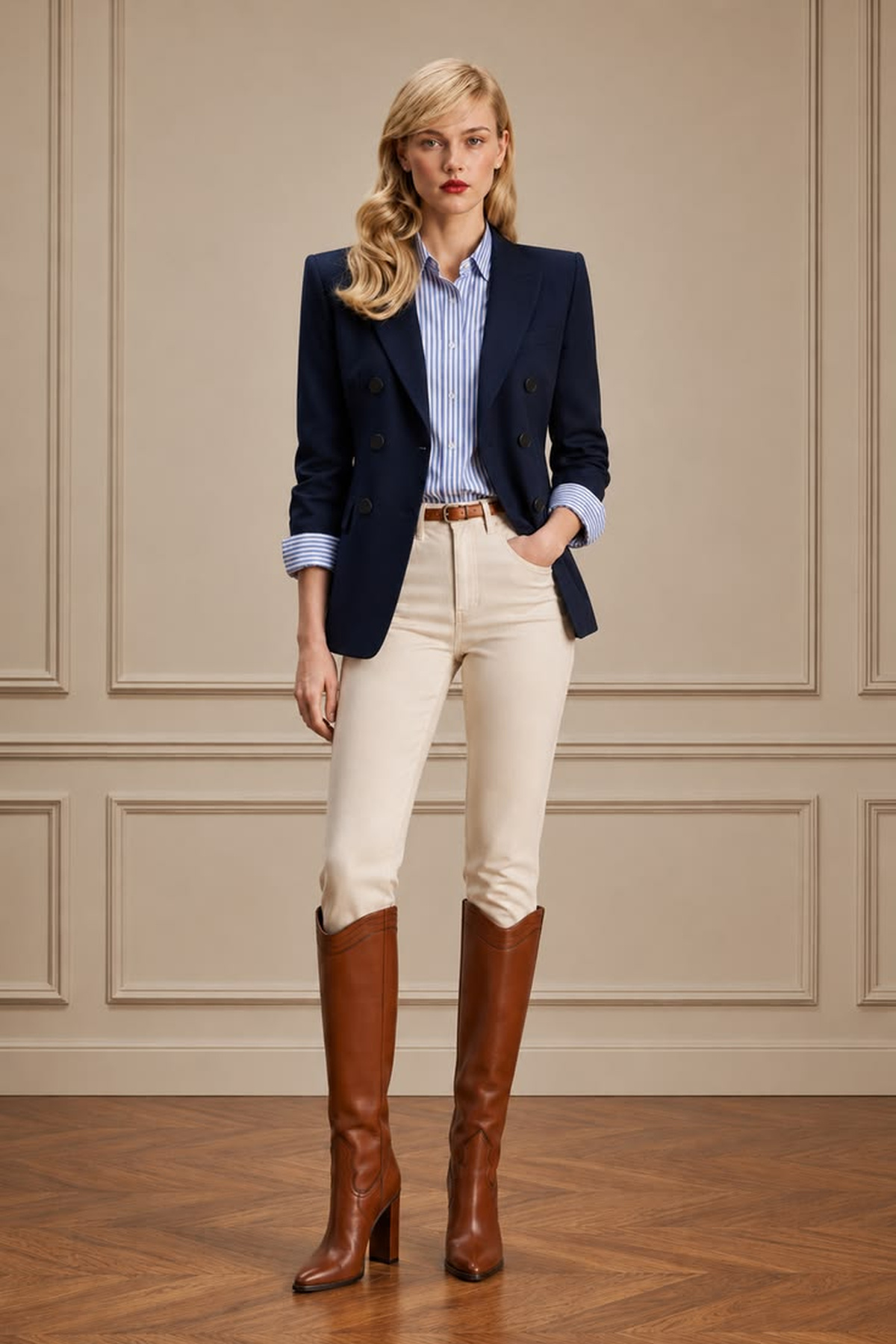
Crisp cotton and denim are both practical fabrics, yet they create enough contrast when their weights and finishes differ. The blue-and-white striped shirt feels light and sharply pressed, while the dark wide-leg jeans look dense and structured. Rolling the sleeves adds ease without disrupting the clean vertical lines.
A smooth cobalt bucket bag repeats the blue story in a richer finish, and a slim tan belt separates the two woven fabrics. Brown flats add a softer leather texture at the base. This combination demonstrates that texture mixing does not always require satin or statement materials; fabric weight, weave, and polish can do the work.
Styling note: Keep cotton crisp and denim dark when you want a casual texture combination to read as polished.
Frequently Asked Questions
How to Mix Textures in a Neutral Wardrobe
How many textures should a neutral outfit include?
Two or three clearly different textures are enough for most outfits. Start with one dominant surface, add a contrasting fabric, and use a third texture only in a smaller accessory or detail.
Which colors count as neutrals for texture mixing?
White, ivory, beige, camel, taupe, grey, brown, navy, dark denim, olive, burgundy, and black can all support a neutral wardrobe. What matters most is choosing compatible undertones and limiting the number of competing colors.
How do you wear satin without making an outfit look too formal?
Pair satin with a matte or practical fabric such as knitwear, denim, cotton, or tailored wool. Keep the silhouette simple and use only one large satin piece so its sheen looks intentional rather than evening-specific.
Can a neutral wardrobe include accent colors?
Yes. Use one accent color in a structured garment or small accessories, then let neutral pieces occupy most of the outfit. Repeating the accent once in shoes, a bag, jewelry, or a print creates cohesion.
How do you keep mixed textures from looking busy?
Limit the palette, vary the scale of the textures, and choose one focal material. If one piece is embossed, draped, or highly reflective, keep the remaining silhouettes and accessories clean.
A Clear Final Edit
Before You Finish the Outfit
- Two or three distinct textures are visible.
- One material acts as the focal point while the others support it.
- Reflective fabric is balanced with a matte or tactile surface.
- Neutral undertones look compatible in daylight.
- Any accent color is repeated with intention and does not overpower the palette.
- The fabric weights suit the season, setting, and amount of movement required.