Minimalist style is not about reducing every outfit to plain black basics. The most successful minimalist outfits feel considered because one idea leads the composition: a crisp shirt against fluid trousers, a tailored blazer over satin, a tonal navy story, or a small red accent repeated with precision.
Texture is especially important when the palette is restrained. Denim can ground satin, fine knitwear can refine a sturdy skirt, and polished leather can warm navy or black. Pattern also has a place when its scale is controlled and one of its colors is repeated elsewhere in the outfit.
The seven minimalist outfit formulas below are designed for repeat wear. Each combines familiar wardrobe pieces in a way that can be adapted with different fabric weights, shoes, and accessories. Start with the formula closest to what you already own, then repeat its central contrast rather than copying every item exactly.
White Shirt + Beige Wide-Leg Trousers
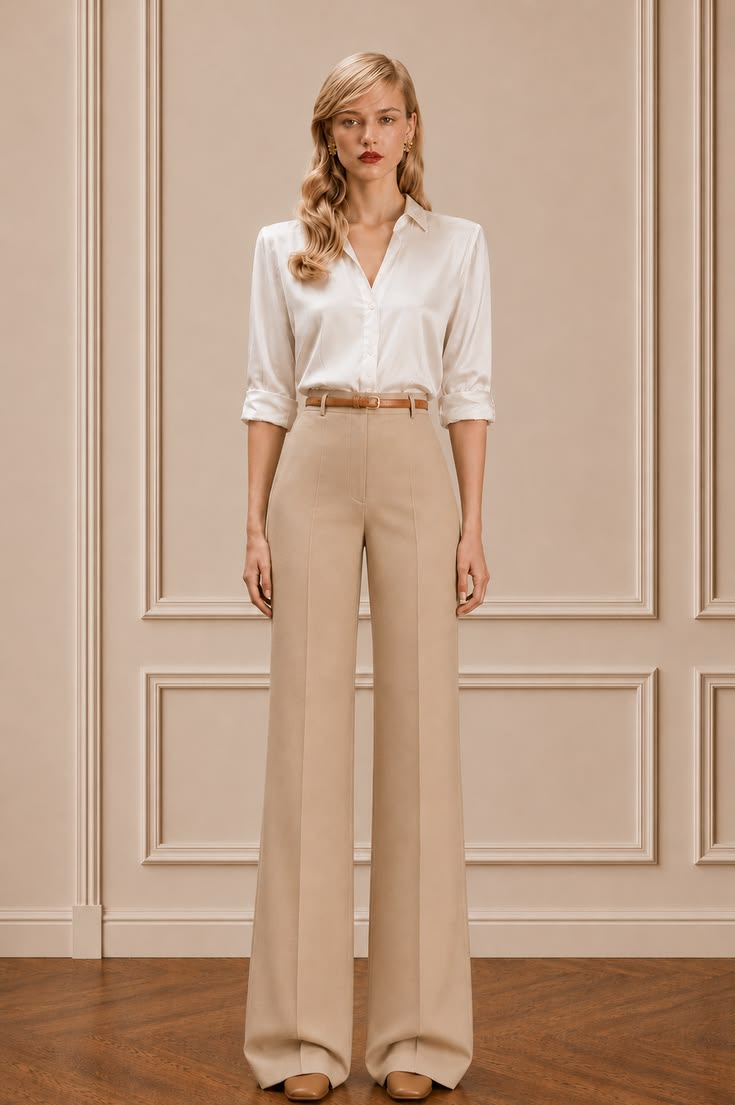
A white button-down and beige wide-leg trousers prove that a simple outfit can still have presence. The shirt contributes a crisp, clean surface, while the trousers introduce softer movement through their long drape. Rolling the sleeves and leaving the collar slightly open keeps the tailoring relaxed enough for an everyday minimalist wardrobe.
The narrow tan belt is the detail that gives this pale combination definition. Brown shoes continue that warm accent without disturbing the restrained palette. Choose an opaque shirt with a neat collar and trousers made from substantial suiting or crepe so both pieces hold their shape. The result works for the office, lunch, or any smart-casual setting with only a change of bag.
Styling note: Repeat the same warm brown leather in the belt and shoes, but keep the hardware minimal so the light palette remains the focus.
Navy Turtleneck + Denim Midi Skirt + Tall Boots
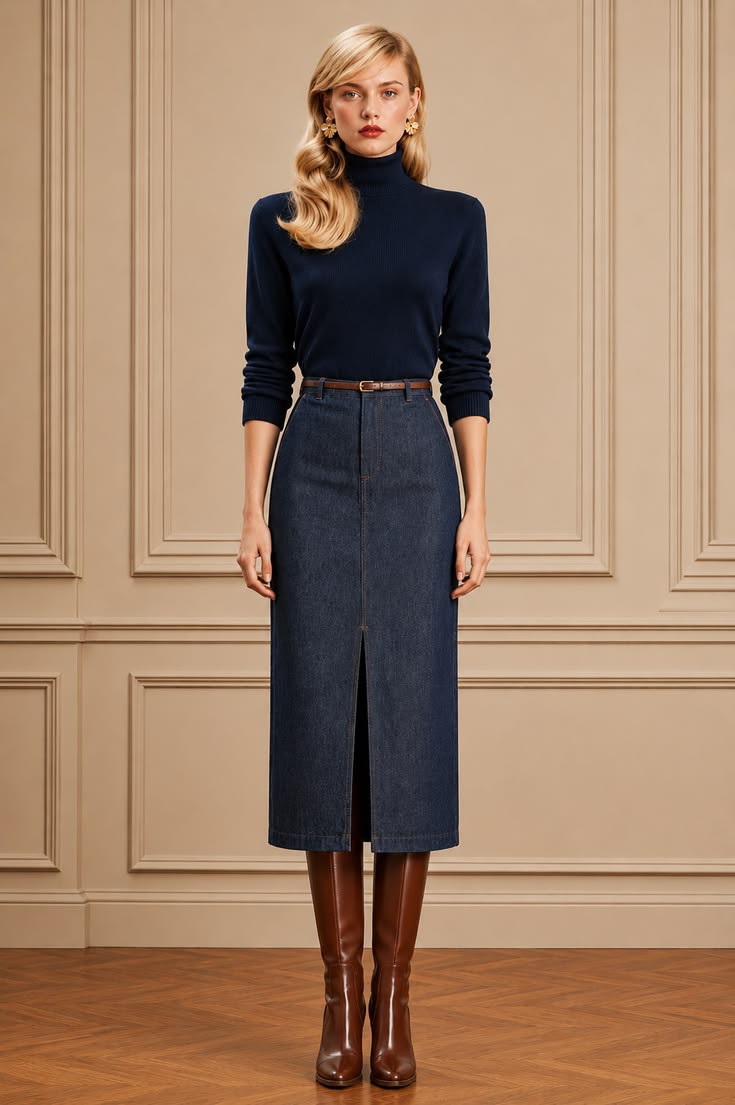
A navy turtleneck and dark denim midi skirt create a nearly monochrome column with enough textural contrast to remain interesting. The fine ribbed knit looks refined beside sturdy denim, while the skirt's front seam and restrained slit add structure and ease of movement. This is a useful cold-weather formula when black feels too severe but you still want a deep, cohesive palette.
Brown knee-high boots and a slim matching belt warm the navy without introducing a competing color story. Let the skirt overlap the boot shaft so the outfit reads as one continuous composition. A compact shoulder bag or top-handle bag would preserve the clean scale. For milder weather, replace the boots with brown loafers and keep the rest unchanged.
Styling note: Choose denim in a dark, even wash without fading or distressing; the uniform color is what makes the skirt feel polished.
Navy Blazer + Champagne Satin Maxi Skirt
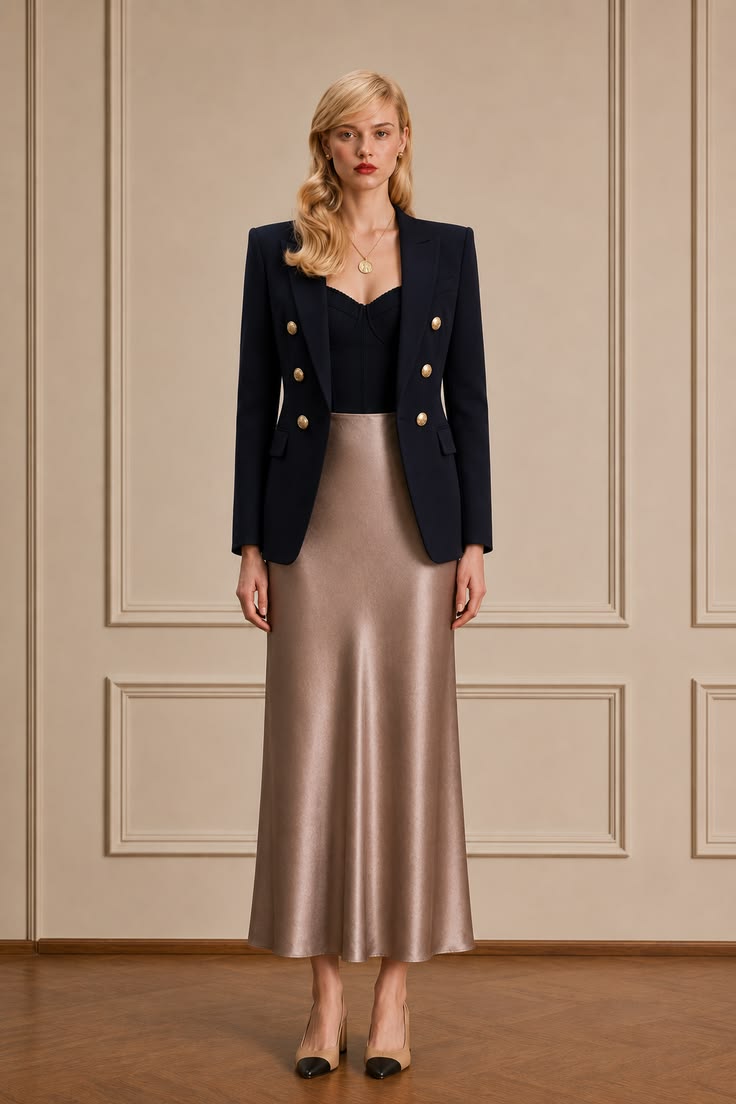
Pairing a sharply tailored navy blazer with a champagne satin maxi skirt creates interest through contrast rather than excess. The blazer's defined shoulders, double-breasted front, and gold buttons establish a strong framework, while the skirt brings fluid movement and a muted glow. A simple black top between the two pieces keeps the palette connected and prevents the satin from feeling overly formal.
This formula can move from a polished daytime event to dinner because the individual pieces remain versatile. Keep jewelry fine and repeat the black accent in a cap-toe pump, slingback, or sleek flat. The skirt should have enough weight to fall smoothly, and the blazer can be worn open so the vertical edges frame the softer fabric beneath.
Styling note: Let the blazer be the only structured statement and the satin the only high-sheen element; that controlled contrast keeps the outfit minimalist.
Polka-Dot Bow Blouse + Navy Midi Skirt
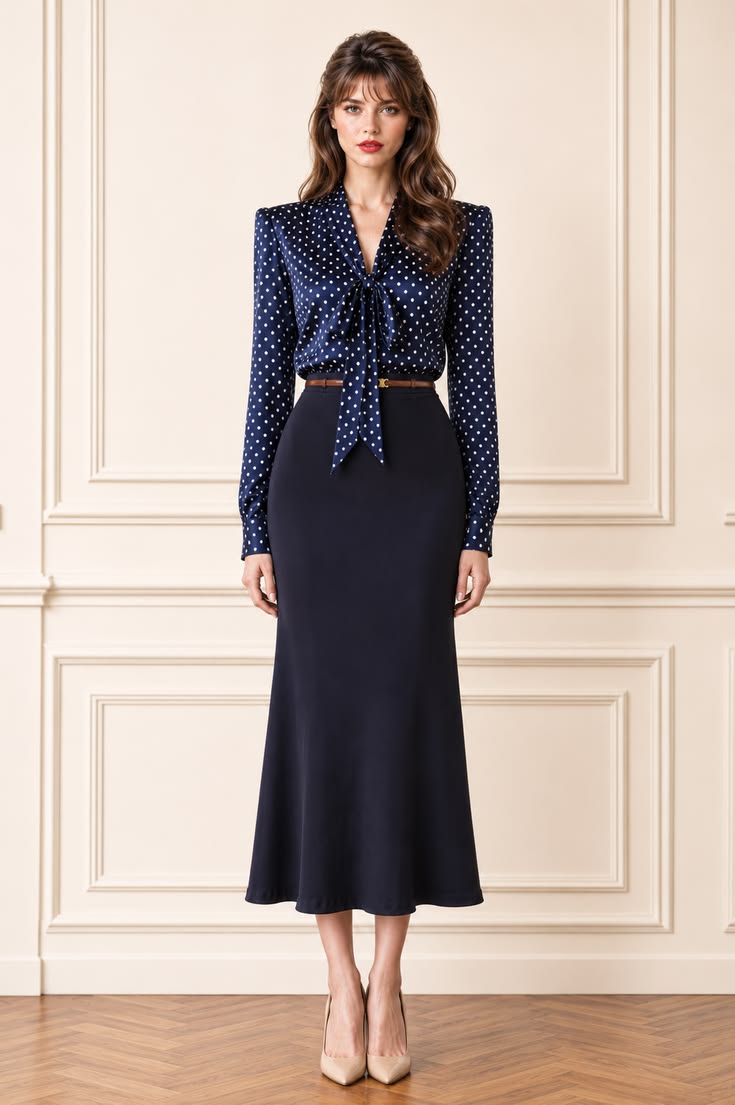
Minimalist dressing does not have to exclude pattern. A navy blouse with small white polka dots introduces a controlled graphic detail, while the long navy skirt keeps the overall impression calm. Because the print is compact and the colors repeat below, the outfit reads as cohesive rather than busy. The softly tied neckline also creates a focal point without requiring additional jewelry.
A slim brown belt separates the two navy pieces and relates naturally to warm neutral accessories. Nude pointed pumps keep the finish light, although navy flats or brown boots would make the formula more casual. Choose a skirt with a clean waistband and gentle movement so it complements the blouse rather than competing with its structured shoulders and bow.
Styling note: When using a print, repeat its background color in the largest piece of the outfit; this makes the pattern feel intentional and easy to style.
Black Blazer + Striped Tee + Tailored Shorts
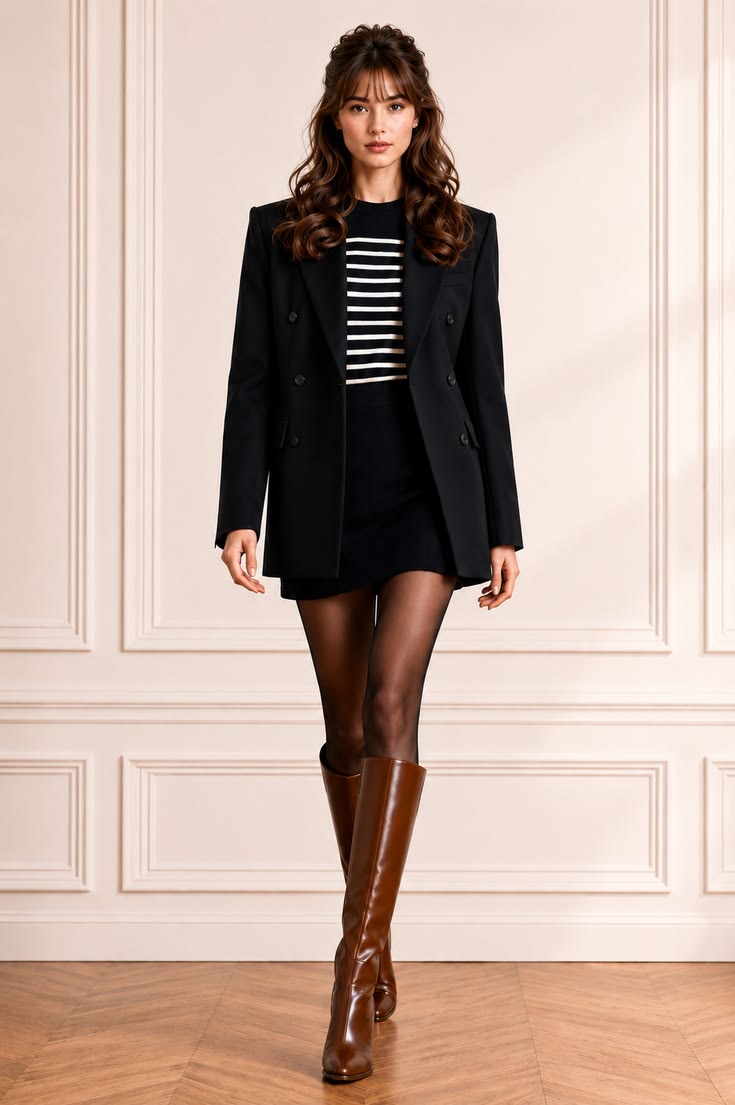
An oversized black blazer, striped tee, and tailored shorts create a graphic weekend formula built from familiar wardrobe staples. The blazer brings a decisive outer line, while the Breton-inspired stripes prevent the black base from feeling flat. Keeping the shorts tailored and the top neatly tucked makes the combination look deliberate rather than improvised.
Tights and knee-high brown boots extend the formula into cooler weather and soften the black-and-white contrast. A small black bag would suit an evening setting, while a brown shoulder bag would make the leather accent feel more integrated. If shorts are not practical for the occasion, the same blazer and striped tee work with a black A-line midi skirt or straight trousers.
Styling note: Keep the stripe narrow and the accessories simple; the blazer, print, and boots already provide three distinct visual textures.
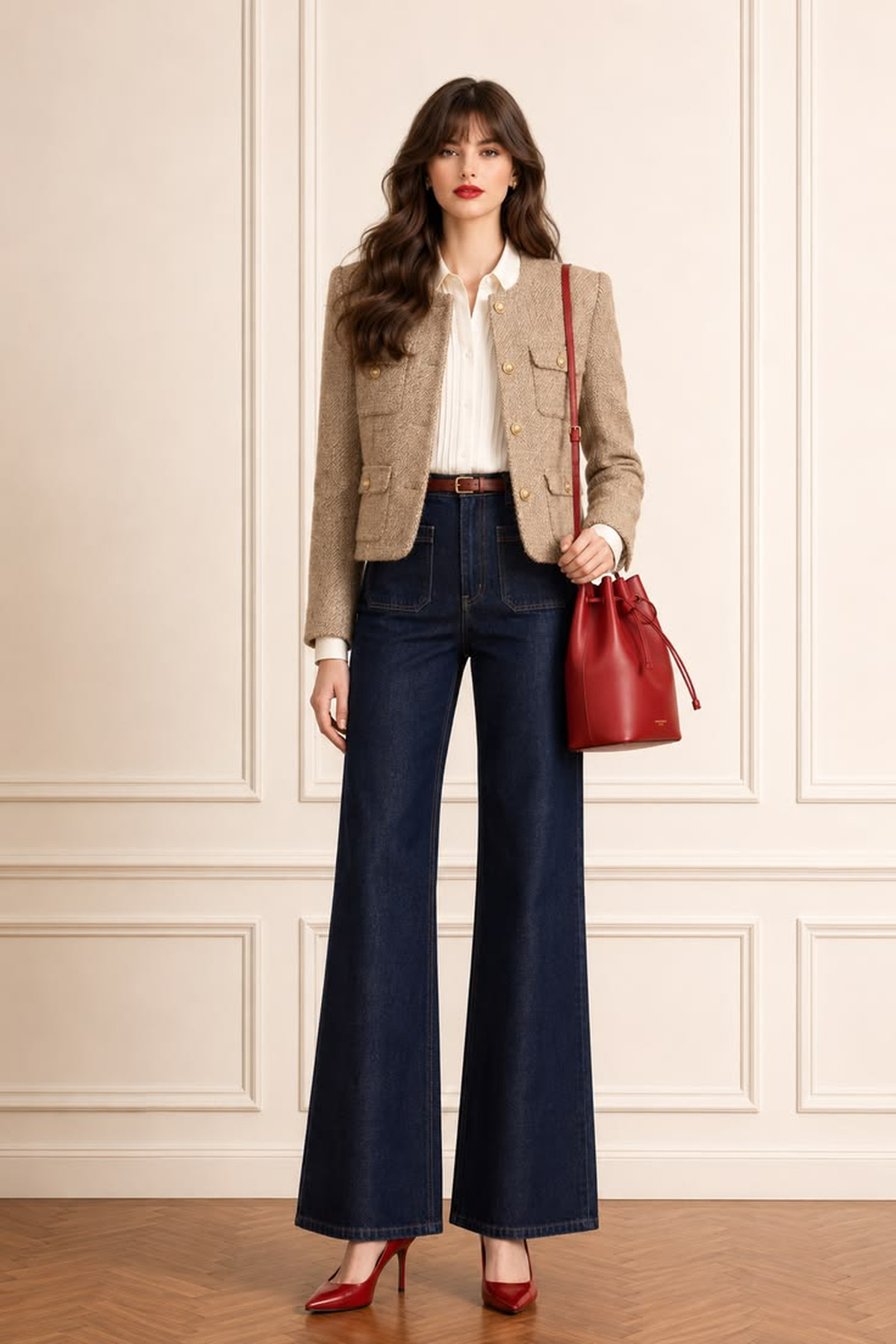
Camel Turtleneck + Dark Wide-Leg Jeans + Red Accents
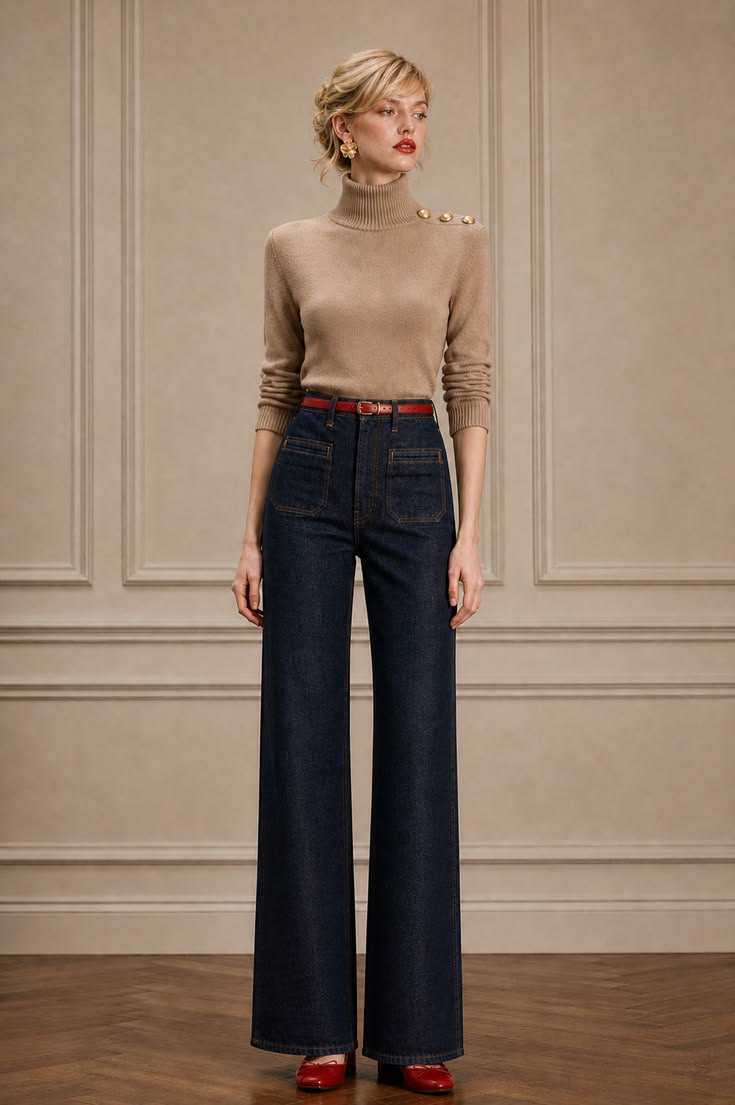
A camel turtleneck and dark wide-leg jeans form an uncomplicated autumn base with strong material contrast. Soft knitwear brings warmth and texture, while the deep indigo denim creates a clean, grounded line. Small gold shoulder buttons add polish to the sweater without changing the restrained character of the outfit.
The red belt and shoes show how a bright color can work in minimalist styling: use it sparingly and repeat it with purpose. Because both accents are compact, they energize the neutrals instead of dominating them. A structured brown bag or simple navy coat would complete the look. For an even quieter version, exchange red for cognac leather.
Styling note: Limit a vivid accent to two small placements separated across the outfit, such as a belt and shoes, for a balanced result.
Champagne Satin Shirt + Dark Wide-Leg Jeans
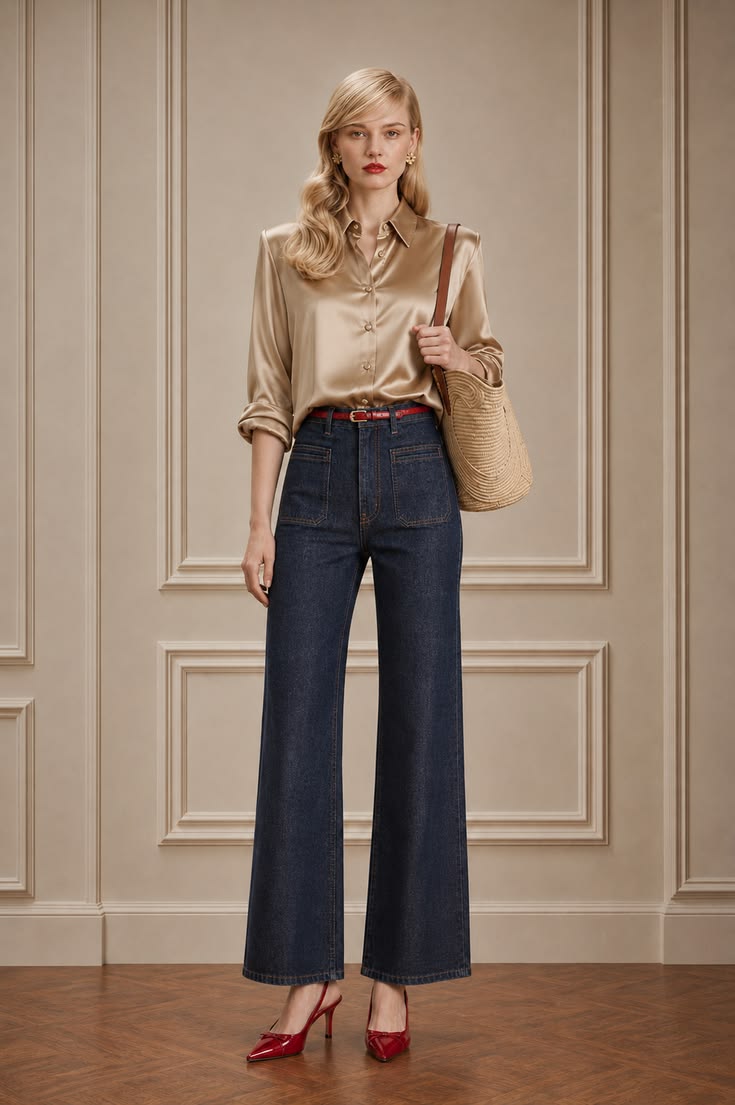
A champagne satin shirt and dark wide-leg jeans balance polish with ease. The shirt's soft sheen catches light and gives the denim a more elevated context, while the jeans keep the look suitable for daytime. A neat front tuck preserves the waistband and lets the contrast between the fluid top and structured denim remain visible.
A slim red belt and pointed red heels bring energy to the neutral combination, while the woven shoulder bag adds a natural, matte texture. This mix of satin, denim, leather, and woven fiber gives the outfit depth without requiring more layers. Wear it for a creative office, weekend lunch, or an early evening event, changing only the bag or shoe height as needed.
Styling note: Roll the satin sleeves evenly and keep the jewelry understated; the fabric mix already provides enough detail.
Frequently Asked Questions
How to Build Minimalist Outfits That Never Feel Boring
How do you make minimalist outfits look less boring?
Build each outfit around one clear contrast: crisp with fluid, matte with satin, dark with light, or neutral with one controlled accent color. Strong fabric and purposeful proportions create more interest than adding several decorative pieces.
Can a minimalist wardrobe include prints?
Yes. Choose a restrained print with a limited color palette, such as navy-and-white polka dots or narrow stripes, and repeat one of its colors in the rest of the outfit. Keeping accessories quiet allows the print to remain a focused detail.
Which colors work best for minimalist outfit formulas?
White, cream, beige, camel, navy, dark denim, brown, grey, and black form a versatile foundation. A small accent such as red can make those neutrals feel fresh when it appears in only one or two intentional places.
How many accessories should a minimalist outfit have?
There is no fixed number, but every accessory should serve a clear purpose. A belt can define the composition, shoes can repeat an accent color, and a bag can introduce texture. Remove anything that competes with the outfit's main idea.
Can these outfit formulas work across different seasons?
Yes. Keep the basic combination and change fabric weight or footwear: use fine knits and boots in cooler months, lighter shirting and flats in warm weather, or add a coat over the same core pieces.
A Clear Final Edit
Before You Finish the Outfit
- Identify one clear focal point: shape, texture, print, or accent color.
- Make sure the fabrics offer at least one visible contrast.
- Repeat leather tones or accent colors with intention.
- Check that each layer keeps its clean line while moving and sitting.
- Save the formula so it can be repeated with another color or fabric weight.